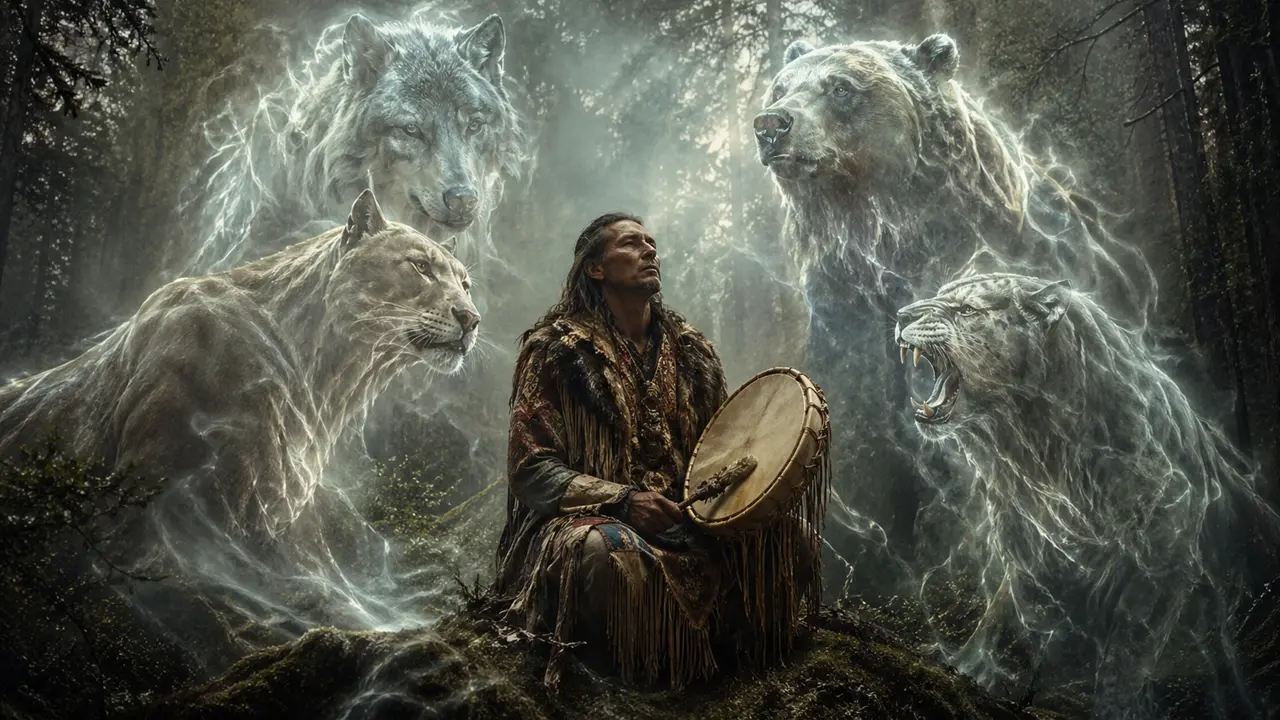
Practitioners of core shamanism and indigenous spiritual traditions engage with mammalian and predatory spirit animals to access specific biological mechanisms, ecological niches, and energetic signatures. Mammals share fundamental physiological traits with humans, rendering their spiritual integration highly accessible during the shamanic journey. By interacting with these entities, a practitioner integrates the sensory capabilities, hunting strategies, and environmental adaptations of the specific species into their own spiritual framework.
Foundational Mammalian Traits in Shamanism
Mammalian spirit work centers on the physiological realities of endothermy, intense maternal investment, and complex neocortical processing. Practitioners channel these biological realities into spiritual techniques, relying on the structural similarities between human anatomy and mammalian biology to facilitate therianthropic shape-shifting in trance states.
Social Structures and Predation Dynamics
Mammals exhibit varied social structures that dictate their spiritual utility. Pack dynamics offer lessons in cooperative survival, strict hierarchical systems, and communal child-rearing. Spirit guides operating within packs require the practitioner to focus on kin selection and collective energy distribution. Conversely, solitary hunters provide teachings on self-reliance, ambush tactics, and territorial isolation. Practitioners working with solitary predators focus on independent energetic cultivation and the preservation of personal spiritual boundaries.
Environmental Adaptation and Navigation
Animals adapt to environmental stressors through specific survival mechanisms. Hibernation involves intentional metabolic depression and torpor, which shamans utilize as a template for deep meditation, vision quests, and psychological withdrawal. This cyclical retreat allows for internal energetic repair. Tracking constitutes another fundamental mammalian skill translated into spiritual practice. Shamans use spiritual tracking to locate lost soul fragments, identify energetic disturbances, and follow the psychic trails left by other entities in the astral plane.
Canine Spirit Guides
Canine animal spirits provide teachings related to social hierarchy, vocal communication, and cursorial hunting strategies. This taxonomic category encompasses both cooperative apex predators and highly adaptable scavengers, offering varied approaches to boundary navigation and communal living.
Wolf shamanism focuses heavily on endurance hunting, extreme loyalty, and structured social ranks. Practitioners working with the wolf access a strong sense of internal discipline and learn to operate seamlessly within a spiritual or physical community. Fox shamanism emphasizes camouflage, edge habitats, and crepuscular activity. The fox serves as a guide for navigating marginal spaces, utilizing the Earth’s magnetic field for direction, and avoiding direct confrontation. Coyote shamanism introduces the trickster archetype to the practitioner. The coyote represents behavioral plasticity, scavenging capabilities, and the dismantling of rigid orthodoxies through disruptive but necessary spiritual interventions.
Canine tracking mechanics applied in spiritual work include:
- Interpretation of scent marks and territorial boundaries
- Analysis of gait patterns across different substrates
- Utilization of auditory triangulation for locating unseen targets
Feline Spirit Guides
Feline predators represent solitary ambush tactics, absolute silence, and acute nocturnal perception within shamanic traditions. These hypercarnivorous spirits frequently guide practitioners through the unconscious mind, facilitating shadow work and the confrontation of repressed psychological material.
Jaguar shamanism holds a central position in Mesoamerican and South American cosmology, often associated with nahualismo. The jaguar operates as a psychopomp, moving freely between the terrestrial realm and the lower world. Panther shamanism utilizes the melanistic traits of leopards and jaguars to navigate complete darkness. The panther spirit aids in astral travel and teaches the practitioner to remain unseen while observing subtle energetic shifts. Lion shamanism deviates from typical feline solitude, focusing instead on sexual dimorphism, pride dynamics, and daytime territorial defense. Lion medicine invokes solar energy, direct confrontation, and the delegation of resources within a group.
| Animal Spirit | Primary Habitat | Hunting Strategy | Core Shamanic Domain |
|---|---|---|---|
| Jaguar | Neotropical rainforest | Ambush predation | Underworld navigation |
| Panther | Dense jungle foliage | Nocturnal stalking | Unconscious mind exploration |
| Lion | African savanna | Cooperative pursuit | Conscious realm leadership |
Ursine Spirit Guides
Bear shamanism constitutes one of the oldest documented spiritual practices across circumpolar and boreal ecosystems. It focuses on physical strength, the cyclical nature of seasons, and the profound physiological changes associated with winter dormancy.
Shamans partner with bear spirits to access deep restorative states and gather knowledge regarding botanical remedies. The bear’s omnivorous diet and constant foraging connect it intrinsically to root systems, berries, and regional flora. Practitioners invoke bear medicine to heal physical trauma, leveraging the animal’s massive muscle density and resilience. The bear’s retreat into the den serves as an allegorical death, followed by its springtime emergence, which represents spiritual resurrection and the renewal of the practitioner’s vital force.
Ungulates and Swift Prey Animals
Hooved mammals and fast-moving prey animals offer medicine related to hypersensitivity, rapid locomotion, and the continuous prey-predator dynamic. These spirits teach practitioners how to detect subtle environmental threats and execute evasive maneuvers.
Deer shamanism focuses on gentleness, nervous system regulation, and non-predatory situational awareness. The cyclical shedding and regrowth of antlers represent continuous regeneration and the reception of higher frequencies, acting as spiritual antennae. Horse shamanism revolves around movement, stamina, and the transportation of the shaman’s consciousness. Historically, the horse acts as the primary mount for the practitioner during trance, enabling rapid transit across vast spiritual landscapes. The horse spirit requires an equal partnership based on mutual respect rather than domination.
Burrowing and Earth-Dwelling Mammals
Animals utilizing fossorial adaptations to live close to or beneath the topsoil provide grounding energy and direct access to subterranean spiritual networks. These entities anchor the practitioner’s energy field to the physical environment.
Badger shamanism utilizes the mustelid traits of fierce territorial defense, digging efficiency, and uncompromising aggression when cornered. The badger spirit assists in unearthing hidden truths and defending personal boundaries against overwhelming odds. Rabbit medicine contrasts this by focusing on prolific reproduction, sudden directional shifts, and the processing of fear. The rabbit teaches the practitioner to recognize the difference between genuine intuitive warnings and irrational paranoia.
Earth medicine applications facilitated by burrowing spirits include:
- Identification and extraction of medicinal taproots
- Grounding of excessive nervous energy post ritual
- Navigation of subterranean dreamscapes during trance
Marine Mammal Spirit Guides
Cetaceans combine mammalian physiology with an aquatic environment, representing emotional resonance, precise breath control, and acoustic communication. These spirits navigate the oceanic realms, which shamanically symbolize the collective unconscious.
Whale shamanism involves deep-sea diving into the deepest layers of ancestral memory. The whale serves as an archivist of planetary history, utilizing low-frequency vocalizations to transmit information across vast distances. Practitioners work with whales to access long-forgotten trauma and clear massive energetic blockages. Dolphin shamanism focuses on echolocation, pod cohesion, and the conscious control of respiration. Dolphins guide practitioners in synchronizing their breath to enter altered states of consciousness, while maintaining a sense of playfulness and communal joy amid emotionally dense environments.