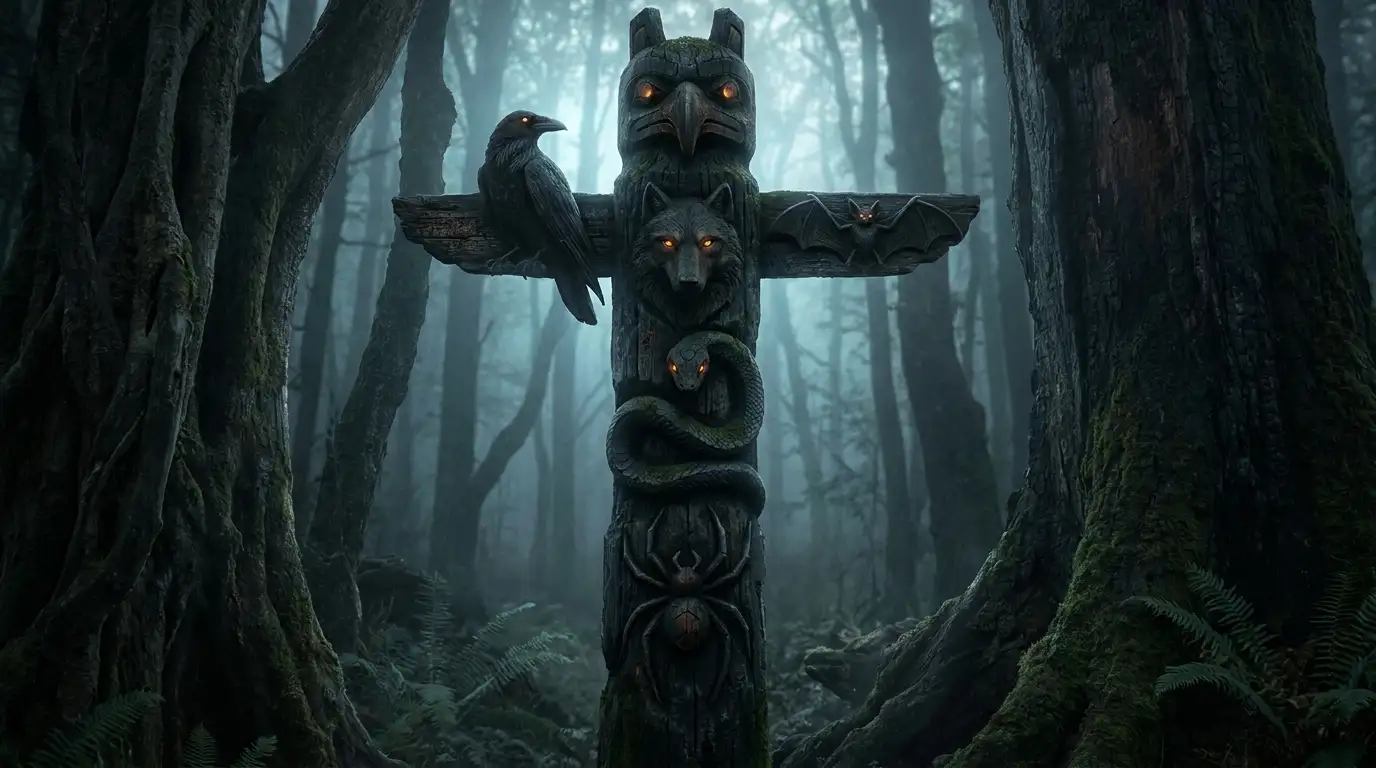
A shadow totem represents a specific animal spirit that evokes profound fear, disgust, or discomfort within an individual practitioner. Rooted in both traditional animism and modern depth psychology, these spiritual entities embody the unacknowledged, repressed, or socially unacceptable aspects of the human psyche. Practitioners who encounter these entities engage in a process of confrontation and assimilation, recognizing that a phobia acts as a compass pointing directly toward latent potential. Acknowledging and cooperating with these entities transforms raw psychological terror into accessible hidden power.
Psychological Mechanisms of the Totemic Shadow
The intersection of shamanic journeying and psychological integration requires understanding how the mind projects its internal conflicts onto external biological forms. Psychological projection occurs when an individual displaces their own unacceptable traits onto an external target, which in the context of totemism becomes a specific animal archetype. By identifying the exact nature of the aversion, the practitioner isolates the precise psychological material requiring assimilation.
Projection and the Aversion Response
Animals that trigger intense visceral reactions serve as mirrors for the fractured self. The mind categorizes certain survival instincts, primal urges, and aggressive tendencies as dangerous due to early social conditioning. When these instincts are suppressed, they do not vanish; they coalesce in the unconscious mind. Encountering a creature that naturally exhibits these suppressed traits triggers an acute defensive response. The practitioner projects their internal fear of their own latent aggression, sexuality, or mortality onto the external animal. This mechanism turns the biological creature into an adversarial spirit guide.
The Diagnostic Nature of Phobias
Specific zoological phobias function as precise diagnostic tools in shadow work. The intensity of the fear correlates directly to the volume of psychological energy trapped within the repressed trait. A mild aversion suggests a peripheral neurosis, whereas a paralyzing phobia indicates a core fracture in the ego structure. Shamans and animist practitioners utilize these fear responses to map the contours of the unconscious, systematically identifying which feared animals hold the keys to a person’s fractured psychological wholeness.
Archetypes of the Feared and the Macabre
Different categories of feared creatures correspond to specific sectors of the human shadow, ranging from mortality and decomposition to predatory aggression and boundary violation. Identifying the biological category of the shadow totem illuminates the exact nature of the unresolved psychological material.
| Biological category | Typical animal examples | Common phobia | Primary repressed psychological trait |
|---|---|---|---|
| Arachnids | Spiders, scorpions | Arachnophobia | Fear of manipulation, female authority, and entrapment |
| Reptiles | Snakes, crocodiles | Ophidiophobia | Fear of transformation, raw sexuality, and betrayal |
| Scavengers | Vultures, hyenas | Aviophobia | Fear of mortality, decay, and the passage of time |
| Parasites | Ticks, tapeworms, leeches | Parasitophobia | Fear of dependency, boundary violation, and depletion |
| Nocturnal mammals | Bats, rats | Chiroptophobia | Fear of the unconscious, madness, and the unseen |
Predators and Venomous Creatures
Venomous creatures and ambush predators confront the practitioner with themes of sudden destruction and absolute power. Spiders frequently appear as shadow totems for individuals struggling with issues of control, maternal trauma, or feelings of entrapment in complex life situations. The web represents both creative architecture and paralyzing confinement. Snakes embody the dual forces of lethal toxicity and total biological renewal. A phobia of serpents often indicates a profound resistance to necessary life transitions, as well as a disconnection from raw, unrefined life force energy.
Scavengers and Decomposers
Creatures associated with death and decay trigger human mortality salience. Vultures and other scavengers consume dead flesh, performing an essential ecological service of sanitation and disease prevention. Psychologically, these underworld guides challenge the practitioner to face their aversion to aging, death, and the termination of obsolete life phases. Parasites and maggots evoke the deepest levels of visceral disgust. As shadow totems, they highlight fears of energetic depletion, toxic relationships, and the breaching of personal boundaries by hostile external forces.
Denizens of the Dark
Animals that operate entirely outside human perceptual norms frequently trigger fears of the unknown. Bats, utilizing echolocation in total darkness, represent navigating life without the benefit of conscious logic. They appear as totems when a practitioner is terrified of trusting their intuition or entering periods of prolonged uncertainty. Rats and other subterranean mammals represent survival at all costs, thriving in the refuse of human civilization. Their presence in a totemic context forces the individual to examine their own hidden shame and the mechanisms they use to survive psychological squalor.
The Transformative Crisis
Encountering and working with a shadow totem rarely occurs in a state of equilibrium; it usually precipitates a severe psychological and spiritual collapse. This period of destabilization destroys the artificial boundaries of the ego, forcing the conscious mind to interact with the repressed material it has spent a lifetime avoiding.
Initiation Through the Dark Night
The sudden emergence of a shadow totem often triggers a dark night of the soul. This prolonged phase of spiritual desolation strips away external coping mechanisms and exposes the individual to their rawest internal fears. The practitioner experiences a loss of meaning, profound isolation, and a sense of impending psychological annihilation. In traditional shamanic societies, this corresponds to the sickness vocation, where the initiate must be broken down entirely by the spirits before they can be rebuilt as a healer. The shadow animal acts as the primary antagonist in this internal theater, relentlessly hunting the ego until it surrenders.
Descent into the Underworld
During this crisis, the shadow totem ceases to be a mere symbol and becomes an active participant in the practitioner’s internal reality. The process mimics a descent into the mythological underworld. The individual must follow the feared creature into the darkest recesses of their own memory and trauma. This descent requires abandoning the safety of rational thought and accepting the irrational, terrifying logic of the unconscious mind. The shadow creature guides the practitioner through their own psychological graveyard, revealing the discarded fragments of their soul that require retrieval.
Methodologies of Spiritual Alchemy
Transforming the terror of the shadow totem into an integrated source of strength requires structured, deliberate practice. Overcoming fear is not about destroying the animal spirit, but rather neutralizing the emotional charge associated with it and reclaiming the energy it guards.
Practitioners utilize several distinct methods to achieve this integration:
- Conducting repetitive journeys to the lower world to observe the animal without interacting
- Engaging in active imagination exercises to establish a dialogue with the feared creature
- Studying the biological habits and ecological importance of the physical animal to build rational respect
- Creating physical art or representations of the animal to externalize the internal image
- Performing somatic release techniques to process the physical nervous system response triggered by the phobia
The Alchemical Synthesis
Integrating the shadow mirrors the classic stages of spiritual alchemy. The initial encounter with the terrifying animal corresponds to the nigredo, the blackening and putrefaction of the ego. Through consistent exposure and dialogue, the practitioner reaches the albedo, the whitening or purification phase, where they begin to understand the animal’s protective function. The final synthesis results in the rubedo, the reddening, where the distinct boundary between the practitioner and the shadow totem dissolves. The traits previously feared—aggression, boundary enforcement, or comfort with mortality—become conscious tools. The practitioner emerges from the process possessing a profound, quiet strength, having successfully converted their deepest terror into their most reliable spiritual ally.