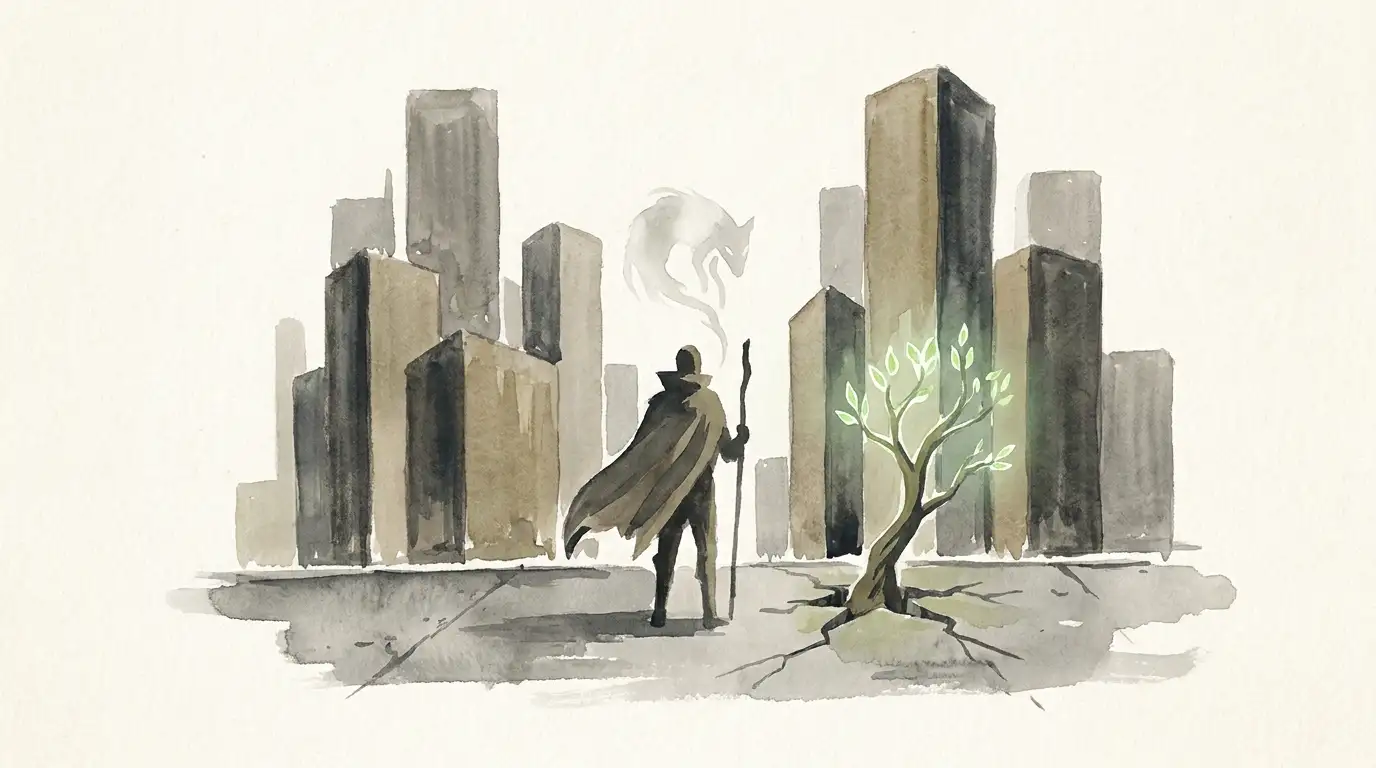
Urban shamanism is a contemporary spiritual framework that adapts traditional animistic practices to metropolitan environments. Practitioners view the concrete jungle not as a dead, artificial construct, but as a living ecosystem inhabited by sentient energies. This discipline applies the core tenet of modern animism—the belief that all objects, places, and systems possess a spiritual essence—to urban infrastructure, public spaces, and municipal systems. Urban shamans interact with city spirits, channel energies through street magic, and practice modern survivalism by integrating nature-based methodologies into densely populated zones.
Conceptual Foundations of Modern Animism
Modern animism posits that the human-built environment generates its own spiritual ecology. Practitioners recognize that metropolitan areas produce distinct energetic currents shaped by human activity, historical events, and geographical features, which is also consistent with the insights and observations from my work. This perspective shifts spiritual focus from pristine wilderness to the immediate surroundings of the municipality, allowing individuals to engage with the consciousness of synthetic materials and mechanical systems. The foundation of this practice requires viewing structural engineering and civic planning as massive, physical manifestations of collective human intent.
City Spirits and Urban Genius Loci
The classical concept of the genius loci translates directly into the contemporary metropolitan environment. A city spirit represents the collective energetic imprint of a specific neighborhood, borough, or municipality. These entities form over decades or centuries, absorbing the emotional residue of millions of inhabitants.
Urban shamans communicate with these overarching spirits to negotiate safe passage, seek local knowledge, or perform neighborhood-level healings. Practitioners often leave offerings at civic monuments or historical landmarks, which serve as physical anchors for the local urban genius loci. The relationship between the shaman and these entities is highly transactional, requiring the practitioner to respect the territorial boundaries established by shifting demographic zones.
Interacting with Architecture and Infrastructure
Buildings and municipal networks possess distinct energetic signatures based on their materials, usage, and structural history. Interacting with architecture requires a practitioner to sense the historical resonance of a specific building before attempting any spiritual operation. Skyscraper foundations, subterranean parking garages, and electrical grids operate as veins and arteries within the city organism.
Infrastructure magic utilizes these physical networks to transmit intentions or gather ambient energy. Practitioners tap into the continuous flow of municipal resources, viewing water mains and fiber-optic cables as conduits for magical intent. The dense concentration of structural materials acts as a massive battery, storing latent energy that trained individuals can manipulate.
| System Type | Energetic Association | Shamanic Application |
|---|---|---|
| Electrical grids | Rapid manifestation | Charging objects |
| Water mains | Emotional cleansing | Purification rites |
| Subway tunnels | Subterranean transit | Underworld journeys |
| Telecommunication lines | Information gathering | Divination practices |
| HVAC systems | Air manipulation | Dispersing energies |
Liminal Urban Spaces and Decay
Transitional zones and deteriorating structures hold significant power in urban shamanic practice. Liminal urban spaces operate as thresholds between the mundane world and the unseen energetic layer of the city. These locations lack a fixed social purpose, allowing spiritual forces to accumulate without human interference. Urban decay further alters these environments, breaking down synthetic barriers and allowing the natural world to reclaim human constructs.
Alleyways and Crossroads Magic
Intersections and narrow passages serve as focal points for spiritual operations within the grid. Crossroads magic adapts ancient folklore traditions to paved intersections, where the convergence of traffic and pedestrian movement generates high-friction energy. Practitioners utilize these junctions to disperse unwanted influences, execute binding spells, or manifest new opportunities by aligning their intentions with the directional flow of traffic.
Alleyways function as the city’s hidden capillaries. These narrow corridors offer concealment for ritual work and harbor minor local spirits averse to heavily trafficked thoroughfares. Shamans utilize these bypasses to map out alternative energetic routes through a district, avoiding the spiritual congestion of major commercial avenues.
Urban Decay as a Spiritual Catalyst
The deterioration of human-built structures creates a specific energetic frequency utilized by urban practitioners. As factories rust and concrete cracks, the rigid control of the municipal grid weakens. Practitioners engage with abandoned lots and derelict buildings to perform rituals involving release, transformation, and entropy. These environments demonstrate the impermanence of the cityscape, providing a raw, unfiltered connection to the cycle of creation and destruction. The structural collapse of a building acts as a localized release of stored potential energy.
Practical Applications of Street Magic
Street magic encompasses the practical methodologies urban shamans use to manipulate their environment. This discipline requires adaptation to constant surveillance, public presence, and rapid environmental shifts. Practitioners develop subtle techniques to alter local probabilities, protect personal space, and communicate with urban entities without drawing mundane attention. Ritual tools are frequently disguised as everyday objects to maintain operational secrecy.
Graffiti Sigils and Symbolic Tagging
Street art frequently functions as a medium for magical intent. Urban shamans integrate graffiti sigils into public spaces to project specific energies into a neighborhood. These symbols operate continuously, charged by the attention of passing pedestrians. Unlike traditional ritual circles drawn in dirt, symbolic tagging embeds the practitioner’s intention directly into the physical skin of the city. The placement of a sigil requires an understanding of civic flow, ensuring the mark receives adequate energetic nourishment without being rapidly erased by municipal authorities.
Applications of street-level symbology include:
- Warding specific architectural thresholds against unwanted intrusion
- Drawing localized ambient energy toward a specific geographical coordinate
- Disrupting stagnant energetic pools within heavily commercialized districts
- Establishing communication markers for local non-physical entities
Public Transportation Magic
Mass transit networks operate as massive, circulating energy systems. Public transportation magic involves harnessing the kinetic energy of subway trains, buses, and trams. Practitioners use these moving environments to accelerate the manifestation of spells or to enter trance states via the rhythmic motion and white noise of the transit system. Subway tunnels, functioning as modern underworlds, provide access to subterranean spirits and dense, earth-bound energies. The axis mundi of the urban shaman is frequently located at major transit hubs, where multiple geographical lines converge.
Urban Foraging and Modern Survivalism
Physical interaction with the city’s biological layer forms a crucial component of contemporary animism. The integration of modern survivalism and urban foraging grounds the practitioner in the physical reality of their environment. By identifying and utilizing local flora, shamans build reciprocal relationships with the biological entities that persist within the metropolitan borders. This practice requires extensive knowledge of local municipal soil conditions and pollution levels.
Pavement Plants and Botanical Resilience
Flora that survives in hostile urban conditions possesses distinct energetic properties. Pavement plants demonstrate extreme resilience, breaking through asphalt and thriving in polluted soil. Urban shamans harvest these resilient weeds for medicinal and magical purposes, valuing their tenacity over the delicate properties of cultivated garden plants. The extraction process involves precise timing and an exchange of offerings, acknowledging the hard-won existence of the organism.
Common botanical targets for metropolitan harvesting include:
- Dandelion roots utilized for resilience and survival workings
- Plantain leaves applied for drawing out heavy metal toxins or negative attachments
- Mugwort gathered from train tracks to induce prophetic dreams regarding urban events
- Japanese knotweed harvested to break through structural blockages in a practitioner’s life
- Yarrow collected from industrial parks to serve as energetic shielding