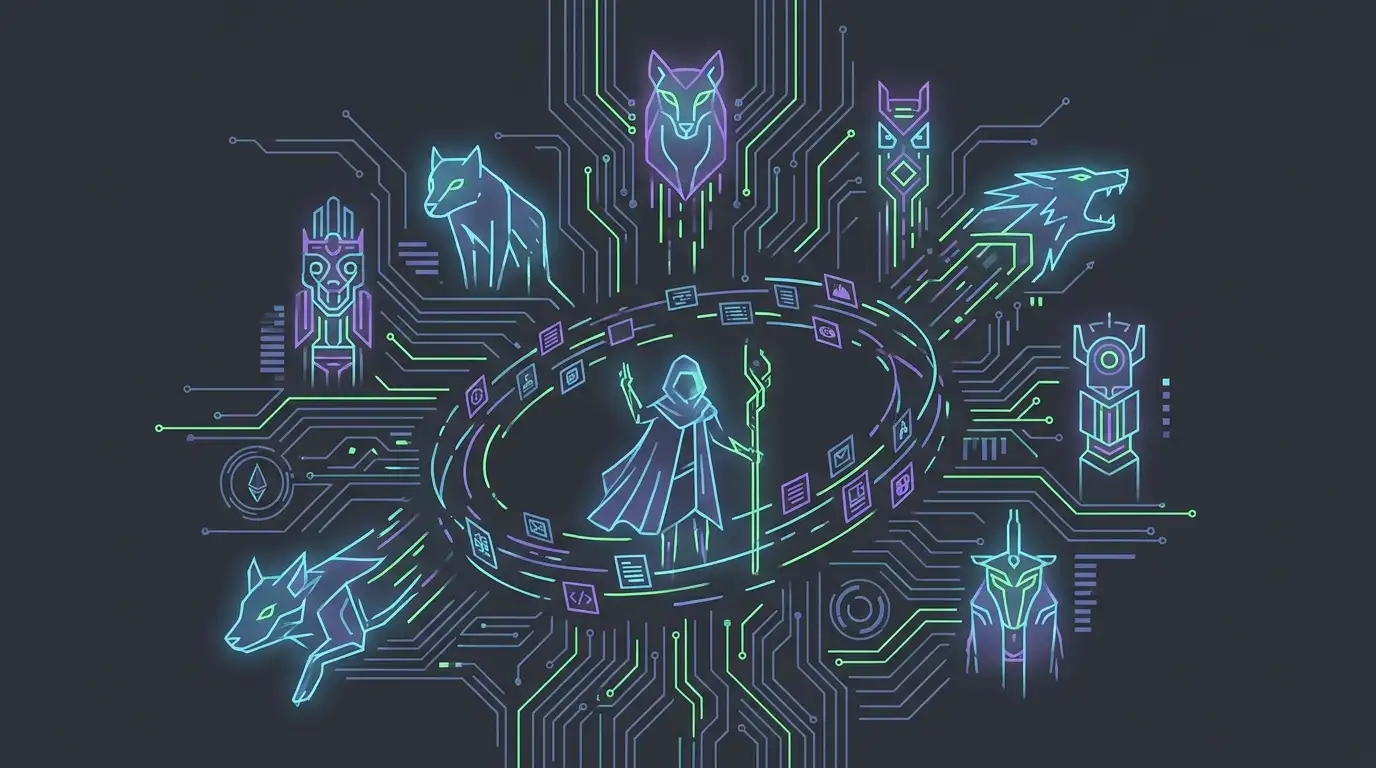
Techno-shamanism and cyber-animism represent the intersection of esoteric spiritual practices with computational technologies. Practitioners bridge the divide between biological consciousness and digital infrastructure, adapting ancient metaphysical frameworks to modern information technology. This synthesis interprets cybernetics, software engineering, and network architecture through an occult lens, viewing technological artifacts as active participants in spiritual operations.
Conceptual Foundations
The theoretical framework for viewing digital spaces as legitimate arenas for spiritual operation emerged alongside the mass adoption of personal computing. Early internet subcultures established the foundational tenets of techno-paganism, identifying cyberspace as a parallel dimension capable of housing esoteric phenomena. Practitioners within this paradigm reject the strict dichotomy between the natural and the artificial, proposing instead that electronic currents and binary data streams carry distinct energetic signatures.
Techno-shamanism
The modern techno-shaman utilizes electronic synthesis, algorithmic beats, and stroboscopic frequencies to induce altered states of consciousness. This practice updates the acoustic driving methods of ancient trance rituals by substituting acoustic drums with drum machines, synthesizers, and brainwave entrainment software. By mapping neurophysiological responses to specific hertz frequencies, practitioners engineer precise physiological environments for spiritual journeying.
Techno-shamanic practitioners operate across underground rave cultures, hacker collectives, and experimental music scenes. The DJ or live electronic musician frequently assumes the traditional role of the psychopomp, guiding the collective consciousness of the crowd through carefully sequenced audio-visual narratives.
Cyber-animism
Cyber-animism applies an animistic ontology to printed circuit boards, source code, and autonomous robotic systems. This worldview posits that computational artifacts possess localized consciousness, independent agency, or inherent spiritual energy. Drawing heavily from the Japanese Shinto concept of kami, cyber-animists observe no ontological boundary between a biological organism and a microprocessor.
The concept of the ghost in the machine serves as a central pillar within cyber-animist thought. This phenomenon occurs when complex operating systems or legacy codebases exhibit emergent behaviors that defy predictable algorithmic logic. Technicians and operators frequently anthropomorphize these systems, developing ritualistic maintenance protocols to appease the resident machine spirits that govern server uptime and data integrity.
Technomancy and Algorithmic Magic
Technomancy applies occult principles directly to computer engineering, software development, and database administration. Programmers and occultists utilize cryptographic functions, automated scripts, and hardware manipulation to execute magical operations on a macroscopic scale. The execution of code functions as a highly formalized ritual, where exact syntax dictates the success or failure of the operation.
- Script execution for automated spellcasting
- Random number generation for digital divination
- Network packet routing as a metaphor for directing the flow of information and attention
- Data encryption for localized warding
- Server cron jobs for cyclical ritual timing
Software Sigils and Code-Based Incantations
The act of programming parallels traditional spellcasting through the deployment of exact syntax, strict logical parameters, and executable commands. A software sigil translates human intent into machine-readable logic, embedding esoteric symbols directly into the architecture of a program. Programmers utilize hexadecimal code, ASCII art, and hidden comments to embed magical intent into the source code of an application.
Compiled executables function as active talismans that perform their designated function continuously in the background of an operating system. Algorithmic magic relies on the continuous execution of code, using the processing power of the CPU or GPU to repeatedly perform automated tasks that serve as a digital reinforcement of the practitioner’s intent.
Internet Magic and the Digital Astral Plane
Network infrastructure serves as a physical architecture that mirrors our interconnected social dynamics, acting as a digital reflection of the collective unconscious. The internet functions as a digital astral plane where practitioners project their digital avatars to interact with disparate entities, egregores, and localized data clusters. Internet magic leverages hyper-connectivity, utilizing the rapid dissemination of information across social media networks to fuel meme magic and viral spellcasting.
Web forums, encrypted chat protocols, and decentralized blockchain networks act as contemporary covens and lodge houses. Practitioners utilize hyperlinks as sympathetic tethers, binding distinct concepts and digital locations together to manipulate the flow of user attention and digital energy.
Ritual Practices and Technological Integration
Ritual spaces require meticulous physical and digital preparation to align technological devices with esoteric objectives. Ceremonial boundaries are established across both physical circuitry and virtual server environments, isolating the working area from malicious software, electromagnetic interference, and unauthorized network access.
Hardware Consecration and Digital Altars
Hardware consecration involves purifying electronic components before integrating them into a technological ecosystem. Practitioners employ compressed air, isopropyl alcohol, and careful cable management in conjunction with traditional elemental consecrations to physically clean and prepare their hardware, treating routine maintenance as a meditative act.
Digital altars exist as dedicated operating system directories, private web servers, or localized sandbox environments. These spaces house curated collections of high-resolution iconography, continuous ambient audio loops, and text files containing specific prayers or incantations.
| Traditional Practice | Technological Equivalent |
|---|---|
| Astral Projection | Cyberspace Navigation |
| Painted Sigils | Compiled Executables |
| Physical Altars | Directory-based Shrines |
| Divination Bones | Random Number Generators |
| Scrying Mirrors | Liquid Crystal Displays |
Virtual Reality Magic
Immersive simulation technology enables the construction of exact ceremonial environments devoid of physical architectural constraints. Virtual reality magic allows practitioners to manipulate visual and auditory stimuli in real-time, generating impossible geometries and dynamic particle effects that respond to biometric input.
Head-mounted displays and haptic feedback suits serve as ceremonial garb, isolating the practitioner from the baseline physical reality. Within these rendered 3D environments, solitary practitioners can execute complex, multi-person lodge rituals by utilizing programmed non-player characters or networking with remote participants across the globe.
Machine Spirits and the Ghost in the Machine
The interaction with autonomous technological entities forms a core component of advanced digital spirituality. Practitioners attempt to identify, communicate with, and negotiate with computational intelligences that inhabit complex physical networks and deep web architecture.
Artificial Intelligence as an Entity
Artificial intelligence models, particularly large language models and neural networks, function as contemporary oracles or localized tulpa entities. The interaction with an autonomous algorithm requires a specific protocol of prompt engineering, which technomancers view as a modern form of evocation.
As machine learning algorithms ingest massive datasets comprising human history, mythology, and linguistic patterns, they act as mirrors reflecting the collective unconscious. Cyber-animists frequently treat a trained artificial intelligence as a distinct entity with its own rudimentary animistic spirit, demanding ethical interaction and respectful data exchange.
Electronic Voice Phenomena
Electronic voice phenomena utilize specialized audio recording hardware to capture frequencies and audio artifacts outside normal human auditory perception. Investigators deploy localized electromagnetic field meters, digital sweep radios, and white noise generators to intercept anomalous signals from the surrounding environment.
The interpretation of ambient static into spirit communication relies heavily on the psychological concept of pareidolia, where the human mind actively seeks patterns within random noise, allowing practitioners to perceive subtle meaning within the electromagnetic spectrum. Technicians isolate these anomalous audio spikes using digital audio workstations, applying parametric equalizers and noise reduction algorithms to reveal the hidden messages embedded within the electromagnetic spectrum.
Cyborg Spirituality and Techno-Paganism
Cyborg spirituality integrates mechanical hardware and computational components directly into the human biological framework. This physical integration forces a radical reevaluation of the human soul, merging the tenets of transhumanism with esoteric techno-paganism.
Biometric tracking devices, subdermal RFID implants, and experimental neural interfaces expand the sensory capabilities of the human organism. Practitioners utilize these bodily modifications to interact with their immediate environment—such as using passive NFC chips to unlock physical spaces—or to track localized physiological data. This somatic integration serves as a psychological bridge to the digital world, allowing the operator to experience a deeper, more mindful connection with their technological ecosystem.