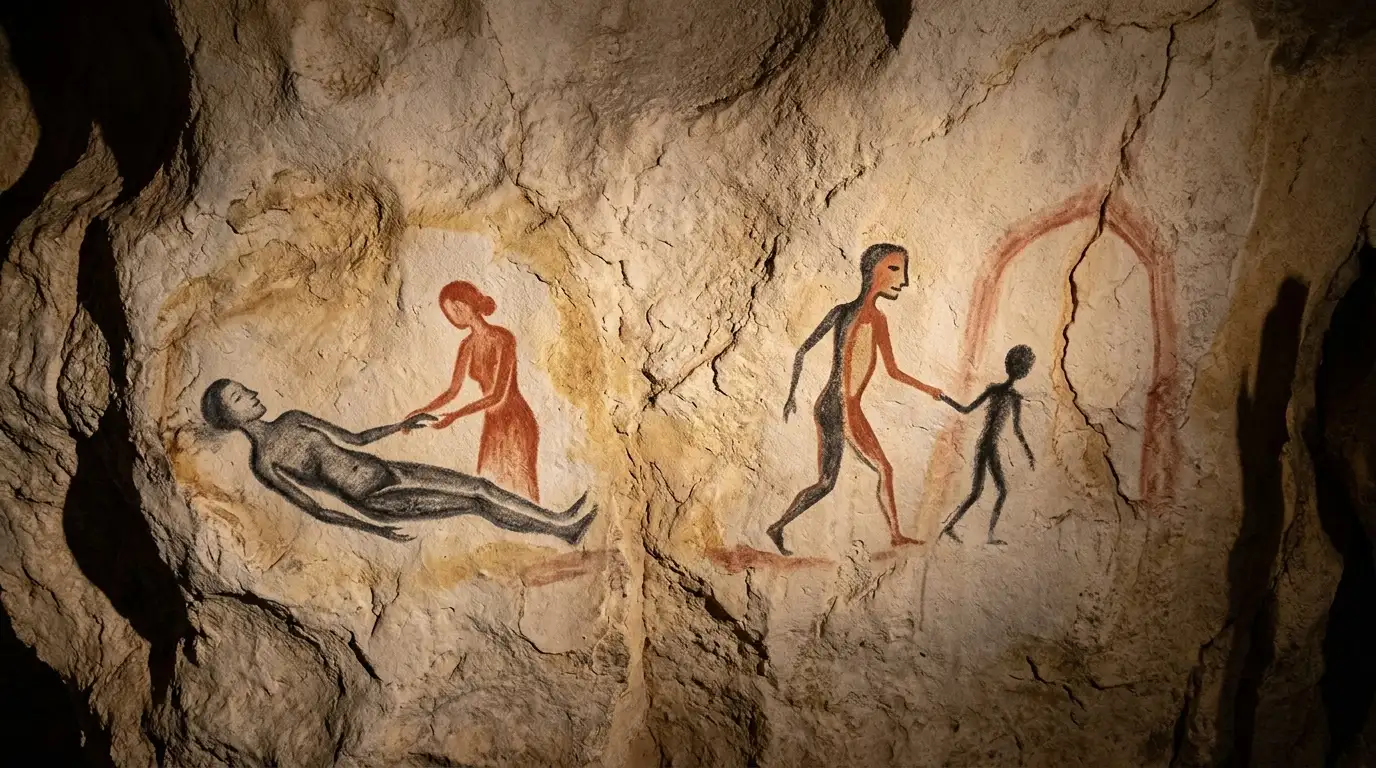
Psychopomp work and death midwifery constitute specialized healing practices within shamanism, thanatology, and animism dedicated to guiding consciousness through the transition of physical death. A psychopomp functions as a spiritual escort, assisting the souls of the deceased in crossing over into the afterlife. The term itself originates from the Greek words pompos, meaning guide, and psyche, translating to mind, soul, or breath. Death midwifery encompasses the holistic, practical, and energetic care provided to a dying individual and their family before, during, and immediately after the cessation of biological life. Practitioners merge ancient eschatology with modern palliative care to ensure a conscious, supported exit from the physical vessel. These disciplines address the multifaceted reality of mortality, managing the physical environment while actively navigating the unseen realms to prevent soul fragmentation.
Navigating Liminality and Spiritual Transition
The threshold between life and death establishes a state of liminality, a transitional phase where the boundaries of ordinary reality dissolve. Practitioners working in this space recognize that physical death does not instantaneously terminate consciousness. Instead, the soul enters a temporary holding environment where the ego begins to dismantle. Navigating this intermediate phase demands a steady energetic presence from the practitioner, who acts as an anchor for the departing consciousness. Providing this stability requires the death midwife to hold space without imposing personal fears or attachments onto the dying individual.
The Bardo and the Afterlife
Various traditions conceptualize the intermediate state of spiritual transition differently, with the Tibetan Buddhist concept of the bardo offering a highly detailed cartography of the afterlife. The bardo represents the gap between death and rebirth, a hallucinatory landscape shaped by the karmic imprints and psychological conditioning of the deceased. A shamanic practitioner navigates this terrain alongside the soul, offering instructions to recognize the clear light of reality and avoid the deceptive projections of unresolved trauma. Underworld navigation forms a primary component of this process. The practitioner enters an altered state of consciousness, often utilizing rhythmic drumming or rattling, to map the spiritual topography and identify the safest route for the soul to travel.
Funerary Magic and Death Rites
Establishing a formalized container for the spiritual transition involves specific funerary magic and death rites. These ceremonial acts communicate directly with the subconscious and the spirit world, signaling that a permanent shift is occurring. Rituals vary widely across lineages but generally share a focused intention to sever the etheric cords binding the deceased to the physical plane.
Common components of these rites include:
- Washing the physical body with consecrated water or botanical infusions
- Anointing pulse points with protective oils such as frankincense or spikenard
- Reciting specific incantations or prayers to open the spiritual gates
- Tending a continuous flame to serve as a navigational beacon for the soul
- Creating a death altar featuring ancestral representations and psychopompic animal guides
Resolving Hauntings Involving Earthbound Spirits
Consciousness occasionally fails to complete the transition to the afterlife, resulting in the manifestation of earthbound spirits or ghosts. Sudden traumatic deaths, unresolved addictions, heavy emotional attachments, or a fundamental lack of awareness regarding their own passing can cause souls to linger in the physical environment. These stranded entities often drain ambient energy to sustain their fragmented awareness, generating phenomena commonly categorized as hauntings. Shamanic practitioners approach these situations not as adversarial battles, but as opportunities for compassionate intervention and ghost rescue.
Ghost Rescue and Crossing Over
The mechanics of ghost rescue require the psychopomp to establish direct communication with the localized entity. Practitioners often journey into the middle world—the invisible energetic mirror of our physical reality—to locate the trapped soul. Once located, the psychopomp assesses the specific psychological or energetic barrier preventing the spirit from crossing over.
Intervention strategies depend on the nature of the blockage. If the spirit remains unaware of its death, the practitioner gently breaks the news, often projecting memories of the fatal event to break the denial. If the spirit stays due to guilt or a perceived need to protect living relatives, the practitioner facilitates a dialogue between the deceased and the living to provide closure. Finally, the psychopomp opens a portal, often summoning the entity’s own healed ancestors or spirit guides, to escort the rescued soul into the light.
Spirit Release Therapy and Energetic Clearing
When earthbound spirits attach directly to a living host rather than a location, the situation requires spirit release therapy. This specialized modality addresses entity attachment, a condition where a living person’s auric field becomes compromised by a discarnate consciousness. Intrusive energies can exacerbate physical illness, trigger sudden mood swings, and generate uncharacteristic behaviors in the host.
The practitioner initiates energetic clearing through a methodical extraction process. The shaman enters a trance state to negotiate with the attached entity, convincing it to release its grip on the host. The practitioner then repairs the resulting tear in the host’s energy field, sealing the aura to prevent further incursions.
Indicators of potential entity attachment include:
- Sudden onset of unexplained phobias or anxieties
- Drastic shifts in personality or dietary preferences
- Chronic fatigue that defies medical explanation
- A persistent sensation of being observed in empty spaces
- Recurring nightmares featuring unfamiliar people or locations
| Intervention Type | Primary Target | Objective | Methodology |
|---|---|---|---|
| Ghost Rescue | Localized entities | Relocate soul | Portal opening and spiritual escort |
| Spirit Release | Attached entities | Free the host | Negotiation and auric extraction |
| Space Clearing | Residual energy | Restore harmony | Smudging and sound frequency |
Integrating Ancestral Healing and Grief Counseling
Successful psychopomp work extends beyond the immediate crisis of death to encompass the broader scope of ancestral healing and lineage repair. The actions and unresolved traumas of the dead reverberate through the genetic and energetic lines of their descendants. A shamanic practitioner recognizes that guiding a stuck ancestor to the afterlife fundamentally alters the energetic inheritance of the living family. Resolving historical grief, inherited curses, or generational cycles of abuse requires traveling along the ancestral bloodlines to bring healing to the originating wound.
Grief counseling functions alongside these esoteric practices to support the surviving relatives. Shamanic grief work treats sorrow as a physical substance that must be digested and metabolized, rather than a psychological aberration to be suppressed. Practitioners facilitate somatic release techniques, utilizing vocal toning, breathwork, and ritualized weeping to clear the heavy emotional residue from the bodies of the bereaved. Integrating these holistic methods ensures that the living can integrate the loss, while the dead are liberated to continue their evolution in the unseen realms.