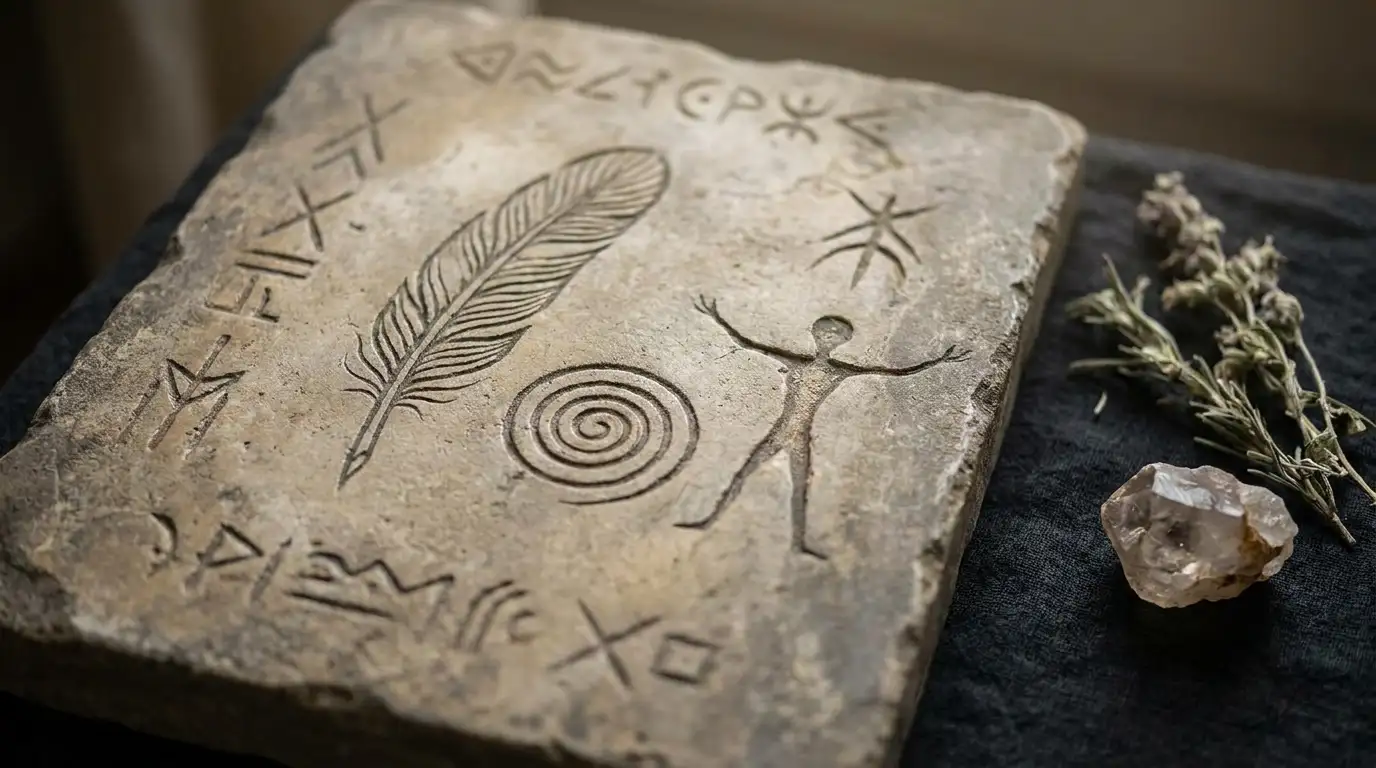
Ancestral healing and clearing generational trauma are specialized branches merging shamanism and systemic therapy focused on repairing the spiritual, emotional, and physical imprints inherited from one’s forebears. Practitioners journey into the energetic web of a bloodline to address unresolved suffering, release family curses, and restore harmony to both the living and the dead via shamanic healing practices. In these frameworks, the past is not viewed as dead history, but as a living inheritance that continues to shape the present through subconscious family patterns, spiritual bonds, and biological adaptations.
To describe these mystical shifts, esoteric traditions often use concepts like kundalini awakening or DNA activation. Rather than implying literal genetic mutation via supernatural means, these terms describe a deep physiological realignment: the somatic and fascial release of chronic muscular “armoring” (holding/tension patterns). By dissolving these trapped tensions, the body restores the proper function of the vagus nerve and peripheral nervous system. Reconnecting with the wisdom of the lineage through this integrated lens allows individuals to transform inherited pain into lasting personal empowerment. But does it physically do anything to the actual DNA? I don’t know. It might, but as of now, there is no definitive scientific proof of that, so let’s not jump to exaggerated conclusions.
The Foundations of Ancestral Healing
Ancestral healing rests upon the premise that our physical bodies and energetic fields carry the memories, triumphs, and unresolved pain of our predecessors. Shamanic traditions view the human soul as an extension of a vast, interconnected family matrix.
Shamanic Perspectives on Bloodline and Lineage
Esoteric and shamanic cultures recognize the bloodline as a living spiritual entity rather than a mere biological sequence. A lineage forms a continuous river of consciousness where the actions, traumas, and soul contracts of previous generations ripple forward into the present. Indigenous healers assert that we are the physical manifestations of our ancestors’ prayers and the inheritors of their unhealed wounds. In these mystical traditions, healing occurs independent of time, operating through a concept called “time-collapsing healing.” It is believed to collapse the temporal distance between the originator of the trauma and the modern descendant, allowing the shaman to alter the energetic resonance of an event at its source.
Epigenetic Healing and Blood Memory
Modern biology echoes the shamanic drum through the science of epigenetics, revealing how ancestral environments leave chemical tags (like DNA methylation) that alter how genes behave without changing the genetic code itself. When ancestors survived great stress or famine, their bodies passed some of these survival adaptations to their children—a biological inheritance famously documented in the Dutch Hunger Winter and Holocaust survivor studies.
Shamans work with this living inheritance through blood memory. While literal biology includes inherited immune adaptations (epigenetic traits shaped by the diseases our deep ancestors survived), in the healing circle, the term “blood memory” is primarily a spiritual metaphor for the energetic retention of ancestral experiences. Similarly, DNA activation is also a metaphor that does not literally mean magically mutating genes or erasing epigenetic markings. Instead, practitioners utilize rhythmic sound, shamanic drumming, and magic ceremonies to stimulate the participant’s imagination and, in turn, the vagus nerve (via means akin to guided meditation or hypnosis). This shifts the nervous system out of ancestral “fight-or-flight,” aiming to biologically turn down inflammatory genes and reawaken the spiritual vitality that was suppressed by generational survival stress.
Morphic Resonance and Psychogenealogy
The transmission of ancestral traits extends beyond physical genetics into the realm of shared consciousness. Biologist Rupert Sheldrake proposed the theory of morphic resonance, suggesting that self-organizing systems inherit a collective memory from past members of their species. Carl Jung described this as the “collective unconscious,” where unhealed family dynamics become subconscious blueprints. Descendants may unconsciously recreate these past traumas, like betrayal, driven by a psychological need to belong to the family system. Psychogenealogy, pioneered by Anne Ancelin Schützenberger, maps these invisible loyalties and unconscious repetitions. Descendants might develop symptoms, phobias, or relationship failures on the exact anniversary of an ancestor’s trauma, driven by a subconscious need to belong to the family system.
Identifying Generational Trauma and Spiritual Burdens
Recognizing the symptoms of inherited pain is the foundational step toward ancestral reintegration. Generational trauma often disguises itself as fixed personality traits, chronic illnesses, or inescapable life patterns. Discerning the origin of these burdens requires distinguishing between different types of ancestral spirits and the specific nature of the energetic debts they left behind.
Well Ancestors, Unhealed Ancestors, and Generational Grief
Not all spirits in a family tree possess the clarity or elevation required to offer guidance. Shamanism differentiates between well ancestors and unhealed ancestors. Well ancestors are those who have successfully transitioned through death, integrated their life experiences, and reached a state of luminous wisdom. They act as protective guardians and fierce advocates for the living. Unhealed ancestors remain trapped in the emotional states of their deaths or the unresolved conflicts of their lives. These unsettled spirits draw energy from living relatives, inadvertently passing down generational grief, addictions, or physical ailments. Such traumas create voids in the human energy field, and these voids are often filled with unexplainable fear, guilt, and sorrow that surface without a direct correlation to the individual’s current life circumstances. However, alongside the grief, families also pass down positive spiritual inheritance—resilience, artistic talents, herbal wisdom, and psychic abilities. Ancestral healing aims to separate the grief from the gifts, allowing the descendant to claim their inherent power without carrying the sorrow of the past.
Unraveling Family Curses and Karmic Debt
Persistent patterns of misfortune across multiple generations often point to family curses or accumulated karmic debt. A curse is rarely a theatrical spell cast by a rival; it is more commonly an intense projection of anger, guilt, or shame locked into the family matrix. Karmic debt arises when an ancestor commits a severe transgression—such as theft, murder, or betrayal—without making reparations. In the ancestral healing theory, the family system seeks equilibrium, meaning the descendants may unconsciously “shoulder the responsibility” to balance the scales. Breaking cycles of karmic debt requires acknowledging the ancestor’s actions, performing restorative rituals, and renegotiating the original soul contracts that bound the family to the cycle of retribution.
Modalities for Clearing Generational Trauma
Clearing the heavy imprints of the past requires specialized therapeutic and shamanic interventions. Practitioners utilize a variety of modalities to map the family system, guide lost spirits, and physically release somatic trauma.
Family Constellations and Systemic Therapy
Developed by Bert Hellinger, family constellations offer a potent method for revealing hidden dynamics within a lineage. This modality operates on the principles of systemic therapy, tapping into the subconscious psychological and emotional field of the family system.
A typical session might follow a similar pattern:
- Participants in a group setting stand in as representatives for the client’s family members
- Representatives naturally begin to feel the emotions and physical sensations of the people they represent
- The facilitator moves the representatives to restore the natural flow of love and respect
- Excluded or forgotten ancestors are acknowledged and reintegrated into the family system
- The client absorbs the new, healthy dynamic, creating an immediate shift in their personal energetic field
Psychopomp Work for Ancestors
When ancestors remain stuck in the lower astral planes due to sudden death, trauma, or strong attachments, they require assistance to cross over. Psychopomp work involves a shamanic practitioner journeying into the spirit world to locate these earthbound souls. The shaman acts as a guide, helping the deceased recognize their physical death and escorting them to the realms of light. Escorting the unhealed ancestor removes the energetic weight from the living descendant, which can shift the spiritual roots contributing to feelings of depression, anxiety, or chronic fatigue.
Time-Collapsing Healing and DNA Activation
Time-collapsing healing treats the past as a simultaneous reality rather than a fixed linear progression. Shamans enter a trance state to journey to the exact moment an ancestral trauma occurred. They intervene energetically—offering protection to a persecuted ancestor or rewriting the energetic outcome of a tragic event. Altering your emotional and somatic relationship to the past immediately changes your present spiritual and psychological situation. This process facilitates the metaphorical DNA activation process, signaling the nervous system to down-regulate stress responses and turn on gene sequences associated with cellular repair, immunity, and biological resilience.
| Modality | Primary Focus | Esoteric Mechanisms |
|---|---|---|
| Family Constellations | Systemic relational dynamics | Spatial representation and empathetic resonance |
| Psychopomp Work | Earthbound or stuck spirits | Shamanic journeying and soul escorting |
| Time-Collapsing | Historical trauma origination | Somatic visualization and energetic reframing |
| Epigenetic Healing | Cellular memory and gene expression | Somatic release and nervous system regulation |
Shamanic Practices and Rituals for Lineage Repair
Practical, grounded rituals anchor the abstract concepts of generational healing into physical reality. Engaging directly with the unseen world through offerings, altars, and physical elements establishes a reciprocal relationship with the deceased.
Ancestral Altars and Offerings
Building ancestral altars provides a dedicated physical space to commune with the lineage. An altar serves as a spiritual portal, bridging the gap between the living and the dead.
To build an ancestral altar:
- Place photographs of deceased relatives to anchor their presence
- Include a glass of fresh water with salt addition to absorb negative energy
- Light white candles to illuminate the path for the ancestors
- Provide regular offerings of food, tobacco, or liquor that the ancestors enjoyed in life
- Speak aloud to the lineage, expressing gratitude for their sacrifices and asking for their guidance
Bone Magic in Ancestral Reintegration
Bones hold the deepest resonance of the physical body and are heavily utilized in shamanic ancestral reintegration. Bone magic involves using animal bones, or in some traditions, the physical relics of ancestors, to communicate with the spirit world. In some shamanic traditions, bones are used as sacred anchors or symbolic “tuning forks.” Because they endure long after flesh decays, they serve as physical vessels to focus intention and connect with the enduring spirit of the lineage.
Healing the Mother Wound
Generational trauma frequently manifests through direct parental relationships. Healing the mother wound involves addressing the inherited pain of maternal suppression, loss of intuition, and scarcity mindsets. It requires breaking the subconscious contract that dictates a daughter must suffer as her mother did.
Healing the Father Wound
Healing the father wound typically addresses patterns of abandonment, authoritarianism, and conditional love passed down through the patriarchal line. Reconciling these wounds demands extending forgiveness not necessarily to the human parents, but to the ancestral archetypes they represent, thus freeing the descendant from repeating the behaviors with their own children. Many lineage repair practitioners live by the adage, “We heal the ancestors to free the descendants.“
Ancestral Guides and Companion Spirits
Shamanic practitioners rarely undertake the work of generational clearing alone. They rely on specialized spiritual allies intricately tied to the individual’s soul and lineage.
The Fetch and Fylgja
In Northern European and Germanic shamanism, the individual is accompanied by protective companion spirits known as the fetch or fylgja. The fylgja often appears as an animal that embodies the person’s character, luck, and spiritual power. This spirit is intrinsically tied to the bloodline, sometimes functioning as a guardian that has protected the family for centuries. When a person’s energy is depleted by ancestral trauma, their fylgja might become weak. Reconnecting with the fetch restores the individual’s spiritual force and provides an infallible guide through the treacherous terrain of the ancestral realms.
Soul Contracts and Breaking Cycles
According to the ancestral healing theory, before incarnating, souls often enter into agreements to heal specific aspects of a family line. These soul contracts dictate the challenges a person will face, casting them in the role of the cycle-breaker. Breaking cycles of abuse, poverty, or addiction is the ultimate culmination of ancestral healing.
To heal the spiritual bloodline, the following actions must be undertaken:
- Identify the recurring pattern within the family history
- Refuse to participate in the toxic dynamics that sustain the pattern
- Perform a severance ritual to cut the energetic cords binding the contract
- Replace the old pattern with a conscious, life-affirming behavior
- Call upon the well ancestors to witness and ratify the new trajectory of the lineage
Completing this work frees the entire family matrix. Healing the self acts as a retroactive balm for the ancestors and a protective shield for future generations, transforming the heavy chain of the past into a ladder of spiritual ascension.