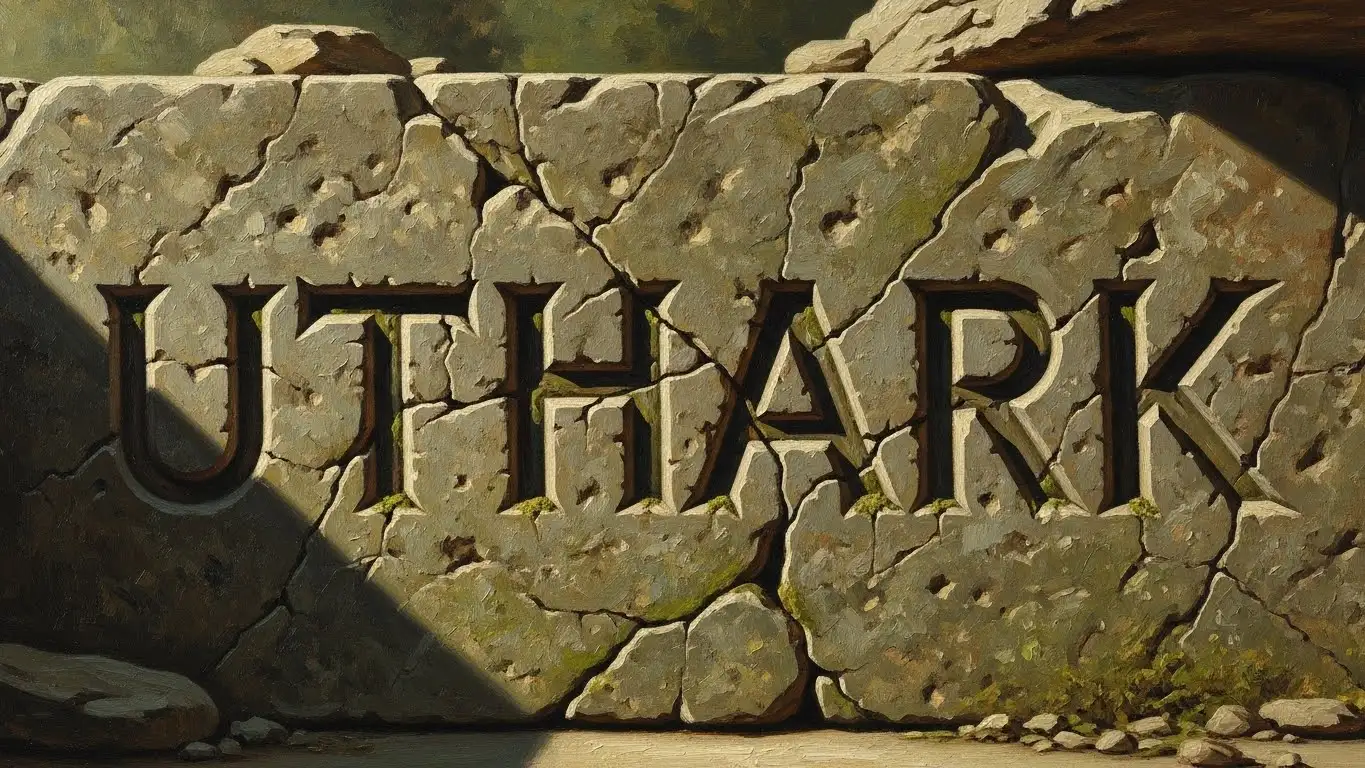
In the dimly lit corridors of esoteric runology, the Uthark Theory stands as a controversial yet potent key to unlocking the hidden potential of the Northern mysteries. While mainstream academic runology adheres to the standard Elder Futhark sequence (F-U-Th-A-R-K…), the Uthark theory posits that this order was a deliberate blind—a protective shell designed to hide the true, operative sequence from the uninitiated. By moving the first rune, Fehu (Wealth/Cattle), to the very last position, the row transforms into a cipher of cosmic creation, shifting from a cultural alphabet into a map of the Draconian current.
This paradigm shift originated with the Swedish philologist Sigurd Agrell across the 1920s and 1930s. Though dismissed by his peers as “alphabet mysticism,” Agrell’s work suggests that the runes were numeric mysteries influenced by Late Antique numerology. For the modern adept or eclectic witch, the Uthark is not about historical accuracy but magickal efficacy; it represents the “Nightside” of the runes—the raw, chaotic undercurrent of reality that exists before human imposition.
The Numerological Inversion
The crux of the Uthark theory lies in the revaluation of the first and last positions. In the traditional Futhark, the sequence begins with Fehu (Domestic Cattle/Wealth) and ends with Othala (Inherited Land/Enclosure). This narrates a journey from “Resources” to “Estate”—a very human, civilization-centric story. The Uthark reverses this logic.
| Rune | Futhark Value | Uthark Value | Esoteric Shift in Meaning |
|---|---|---|---|
| Uruz | 2 | 1 | From Strength to Primordial Origin. |
| Thurisaz | 3 | 2 | From Defense to Primal Giant/Force. |
| Ansuz | 4 | 3 | From Breath to Divine Consciousness. |
| Raidho | 5 | 4 | From Journey to Cosmic Order/Rhythm. |
| Kenaz | 6 | 5 | From Torch to Creative Will/Fire. |
| Gebo | 7 | 6 | From Gift to Sacred Union. |
| Wunjo | 8 | 7 | From Joy to Harmony of Forces. |
| Hagalaz | 9 | 8 | From Hail to Crystalline Structure. |
| Nauthiz | 10 | 9 | From Need to Force of Resistance. |
| Isa | 11 | 10 | From Ice to Manifestation of Matter. |
| Jera | 12 | 11 | From Harvest to Cyclical Time. |
| Eihwaz | 13 | 12 | From Yew to Axis Mundi. |
| Perthro | 14 | 13 | From Dice Cup to Womb of Fate. |
| Algiz | 15 | 14 | From Elk/Protection to Life Force Connection. |
| Sowilo | 16 | 15 | From Sun to Divine Light. |
| Tiwaz | 17 | 16 | From Justice to Ordering Principle. |
| Berkano | 18 | 17 | From Birch to Earth Mother. |
| Ehwaz | 19 | 18 | From Horse to Astral Vehicle. |
| Mannaz | 20 | 19 | From Human to Divine Spark in Man. |
| Laguz | 21 | 20 | From Water to Vital Life Energy. |
| Ingwaz | 22 | 21 | From Seed to Gestation. |
| Dagaz | 23 | 22 | From Day to Enlightenment. |
| Othala | 24 | 23 | From Inheritance to Enclosure. |
| Fehu | 1 | 24 | From Cattle to Final Manifestation. |
Uruz (1): Primordial Chaos
By removing the “F,” the sequence begins with Uruz (The Aurochs/Drizzle). In the Uthark system, Uruz is Rune No. 1.
This aligns perfectly with Norse cosmogony. The universe did not begin with wealth; it began in Ginnungagap, the yawning void, with the primal bovine Audhumbla and the giant Ymir. Uruz represents this undivided, chaotic, vital force—the raw matter of creation before the gods gave it form.
Fehu (24): The Culmination
Consequently, Fehu becomes Rune No. 24. It ceases to be the “initiator” and becomes the “result.” Wealth and civilization are the final products of the magickal work, not the starting point. This placement creates a cyclical system where the accumulated power of the row manifests as tangible abundance (Fehu) before dissolving back into chaos (Uruz) to begin the cycle anew.
The Draconian Tradition and Dragon Rouge
In contemporary occultism, the Uthark has been adopted as the central pillar of the Draconian Tradition, particularly through the work of Thomas Karlsson, founder of the magickal order Dragon Rouge.
Integrating the Qliphoth
Karlsson’s seminal text, Uthark: Nightside of the Runes, frames the row not as a path of daylight and order (the Aesir), but as a descent into the dark, subconscious realms (the Giants/Rökkatru). The Uthark sequence is viewed as a ladder to the Qliphoth—the “shells” or shadow-side of the Kabbalistic Tree of Life. Here, the runes function as sigils for Antinomian praxis (going against the law), allowing the magus to break free from the constraints of Orlog (Fate) and achieve self-deification.
Operational Nightside Mechanics
Working with the Uthark requires a distinct operational protocol. The energies invoked are not the benevolent, ordering powers of Asgard, but the transformative, often destructive powers of Jotunheim.
Uthark Galdr
When performing Galdr using the Uthark, the intonation starts with the low, guttural vibration of Uruz to summon raw potential. The chant builds through the elemental forces and culminates in the high-pitched projection of Fehu to lock the manifestation into matter. This sonic trajectory mimics the cooling of the cosmos from fire and ice into solid earth.
Shadow Work and Bindrunes
The Uthark is the preferred tool for Shadow Work. If an eclectic witch seeks to confront deep-seated trauma or internalized weakness, they might construct a bindrune using the Uthark values of Nauthiz and Hagalaz.
Instead of banishing these forces, the Uthark practitioner invites them in to dismantle the ego’s defenses, viewing the destruction as a necessary precursor to the rebirth promised by the final rune, Fehu.