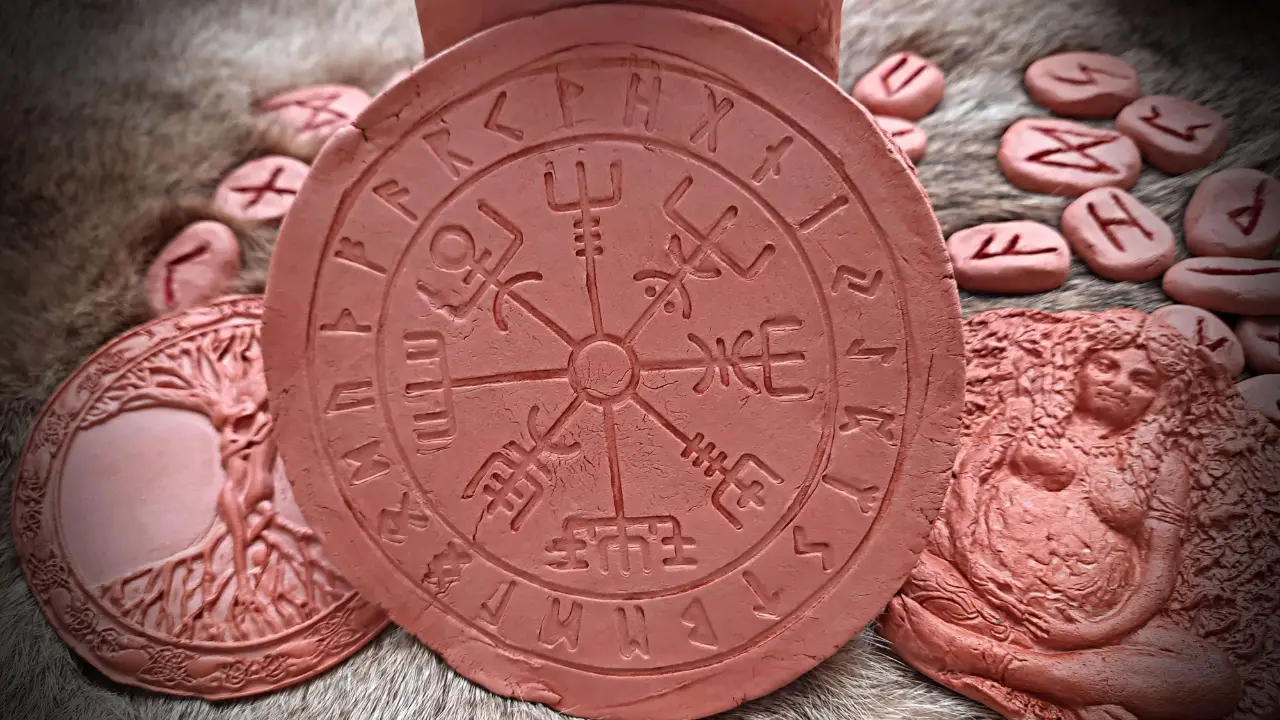
Icelandic Magickal Staves, or Galdrastafir, are geometric, magickal sigils developed in 16th- and 17th-century Iceland to manipulate reality through the syncretic application of Runic Magick, Norse paganism, and medieval European occultism. These symbols operate as visual incantations designed by Galdramenn (sorcerers) to address pragmatic survival needs in the harsh North Atlantic environment. The construction of these staves relies on the precise arrangement of linear marks, runic ligatures, and radiating spokes. Occultists activate the staves through magickal operations involving physical carving, the application of bodily fluids, and vocalized chants (Galdr). The system integrates invocations to Norse Magick entities like Odin and Thor alongside Judeo-Christian figures.
Historical and Grimoire Sources
The preservation of the staves relies on a lineage of handwritten grimoires compiled during and after the Icelandic Protestant Reformation. These texts document the formulas, spatial diagrams, and material components required for operational magick.
The Galdrabók remains the most prominent surviving manuscript, consisting of 47 spells compiled by four different scribes over several decades. Other pivotal sources include the Huld Manuscript, a 19th-century compilation by Geir Vigfússon that catalogs dozens of staves collected from older, lost texts. Legendary, unrecovered black books such as the Rauðskinna and the Gráskinna represent the darker, ecclesiastical necromancy of the era. The scribes of these manuscripts merged the Futhark alphabets with the planetary seals found in continental European texts like the Key of Solomon.
Structural and Geometric Typology
The classification of Icelandic staves depends on their graphical architecture, linguistic roots, and spatial alignment. Structural categories define the semiotic origin of the lines, while geometric categories dictate the directional flow of the intended magickal outcome.
Linguistic and Esoteric Construction
The structural foundation of a stave dictates how it interacts with the cosmological framework of Runic Magick. Novices must understand that not all staves are runes; many abandon alphabetic constraints to function as pure esoteric geometry.
- Bandrúnir: Direct ligatures of multiple runic characters. Magi stack or bind these letters onto a single vertical axis to conceal a name or compress a spoken formula.
- Galdrastafir: Abstracted, non-linguistic modifications of runes. These integrate forks, cups, and crossbars to alter the flow of energy.
- Galdramyndir: Abstract esoteric signs representing cosmic or elemental shapes. These lack runic origins entirely.
- Insigli: Complex seals influenced by Judeo-Christian occultism. They frequently integrate the Rood Cross or geometric containment rings to bind angelic or demonic forces.
Spatial Orientation
The geometric shape of the stave controls the vector of its power. Sorcerers select the orientation based on whether the magick must radiate outward, move toward a target, or map a complex sequence of events.
- Symmetrical Staves: Symbols built on a central convergence point with radiating arms. Employed for perimeter defense and overwhelming outward projection.
- Asymmetrical Staves: Uneven or linear designs. Employed for targeted action, navigation, and moving energy across distances.
- Superstaves: Intricate matrices combining radial spokes, stacked runes, and Galdramyndir into single large-scale diagrams requiring meticulous drafting.
Functional Typology and Example Staves
Grimoire authors categorized staves strictly by their utilitarian purpose, ranging from physical protection and economic prosperity to necromancy and weather manipulation. The operational logic of these staves shares distinct structural similarities with the complex sigils and sigil shoaling practice used in modern Chaos Magick, where abstract geometry encodes highly specific intent.
Protection Staves
Protection staves utilize symmetrical geometry to establish an impermeable boundary around the target, their livestock, or their property. These operations frequently require carving the symbol into a durable substrate like lead or oak.
| Stave Name | Translation / Purpose | Geometric Classification |
|---|---|---|
| Ægishjálmur | Helm of Awe; induces terror in enemies and protects the bearer. | Symmetrical / Radial |
| Rosahringur minni | Lesser circle of protection; wards against malevolent spirits. | Insigli / Circular |
| Stafur gegn galdri | Shield against witchcraft and directed curses. | Asymmetrical |
| Varnarstafur Valdemars | Valdemar’s Protection Stave; grants favor and shields from harm. | Symmetrical |
| Vatnahlífir | Protects the bearer from drowning and dangerous currents. | Asymmetrical |
Luck and Trade Staves
These staves manipulate probability to ensure favorable outcomes in social, legal, and economic disputes. Esoteric adepts historically hid these sigils on their person during negotiations or physical combat.
| Stave Name | Translation / Purpose | Operational Placement |
|---|---|---|
| Gapaldur | Ensures victory in physical combat or wrestling. | Placed under the heel of the right shoe. |
| Ginfaxi | Ensures victory in physical combat or wrestling. | Placed under the toe of the left shoe. |
| Kaupaloki | Prospers trade and prevents the bearer from being cheated. | Carved on a beechwood talisman. |
| Lukkustafir | General luck staves for favorable daily outcomes. | Worn on the body or carved on personal items. |
| Máladeilan | Secures victory in court or legal disputes. | Carved on the inside of clothing. |
Farming, Fishing, and Utilitarian Staves
Survival in early modern Iceland required magickal intervention in daily labor. These staves address mundane but critical tasks, from maintaining tools to securing food sources.
| Stave Name | Translation / Purpose | Magickal Function |
|---|---|---|
| Angurgapi | Prevents leakage and spoilage. | Carved onto the ends of wooden barrels. |
| Brýnslustafir | Enhances the sharpening of blades. | Carved onto whetstones. |
| Hólastafur | Opens hills and rocks to reveal hidden things. | Earth Magick / Exploration. |
| Lásabrjótur | Breaks physical locks without a key. | Utilitarian / Thievery. |
| Smjörhnútur | Butterknot; reveals butter made from milk stolen by a Tilberi. | Farming / Anti-theft. |
| Tóustefna | Wards foxes away from the sheep flock. | Livestock protection. |
| Vegvísir | Wayfinder; ensures the bearer does not lose their path in storms. | Navigation / Travel. |
| Veiðistafur | Secures a bountiful fishing catch. | Drawn with specific avian blood on caul. |
Love, Fertility, and Divination Staves
These staves alter the perception or emotional state of a target, or bypass the conscious mind to extract hidden information through dreams.
| Stave Name | Translation / Purpose | Operational Mechanics |
|---|---|---|
| Að fá stúlku | To win the love or fascination of a girl. | Often requires the magus’ saliva or blood. |
| Draumstafir | Induces prophetic dreams to reveal unknown truths. | Carved on silver or white wood, placed under the pillow. |
| Feingur | Enhances fertility and aids in conception. | Carved on cheese or bread and consumed. |
| Þjófastafur | Thief stave; reveals the identity of a thief in a dream or waking vision. | Carved on the bottom of a wooden bowl. |
Dark Magick and Necromancy Staves
The dark arts of Icelandic witchcraft utilized aggressive staves to inflict harm, induce paralyzing fear, or command the dead. These operations required severe transgressive acts and grotesque material components.
| Stave Name | Translation / Purpose | Magickal Function |
|---|---|---|
| Dreprún | Killing rune; destroys an enemy’s livestock or inflicts physical harm. | Curse / Malefic magick. |
| Nábrókarstafur | Activates the necropants to generate endless wealth. | Kept in the scrotum of flayed human skin alongside a stolen coin. |
| Skelkunarstafur | Induces terror and hallucinations in enemies. | Psychological warfare / Curse. |
| Stafur til að vekja upp draug | Wakes a ghost or spirit from the grave. | Necromancy / Spirit binding. |
Magickal Operations and Activation Mechanics
The efficacy of a stave depends entirely on the exact execution of its corresponding magickal operation. Passive observation holds no power; you must bind your intent to the physical substrate through carving, fluid application, and vocalization.
Select the appropriate substrate based on the grimoire’s instructions. Carve the sigil into wood, bone, lead, or stone using a consecrated blade. Etching the lines creates a physical vessel for the intent.
Apply the required fluid medium to the carved lines to awaken the geometry. Historical operations demand specific biological components—human saliva, human blood, or the blood of a specific animal. The fluid acts as the vital force that links the occultist’s subtle body to the physical talisman.
Intone the Galdr. Vocalization breathes life into the stave. Chant the runic formulas, divine names, or specific operational prayers while tracing the blood-filled lines. The phonetic resonance of the Galdr aligns the localized geometry of the stave with the broader cosmological forces of Runic Magick, finalizing the spell.