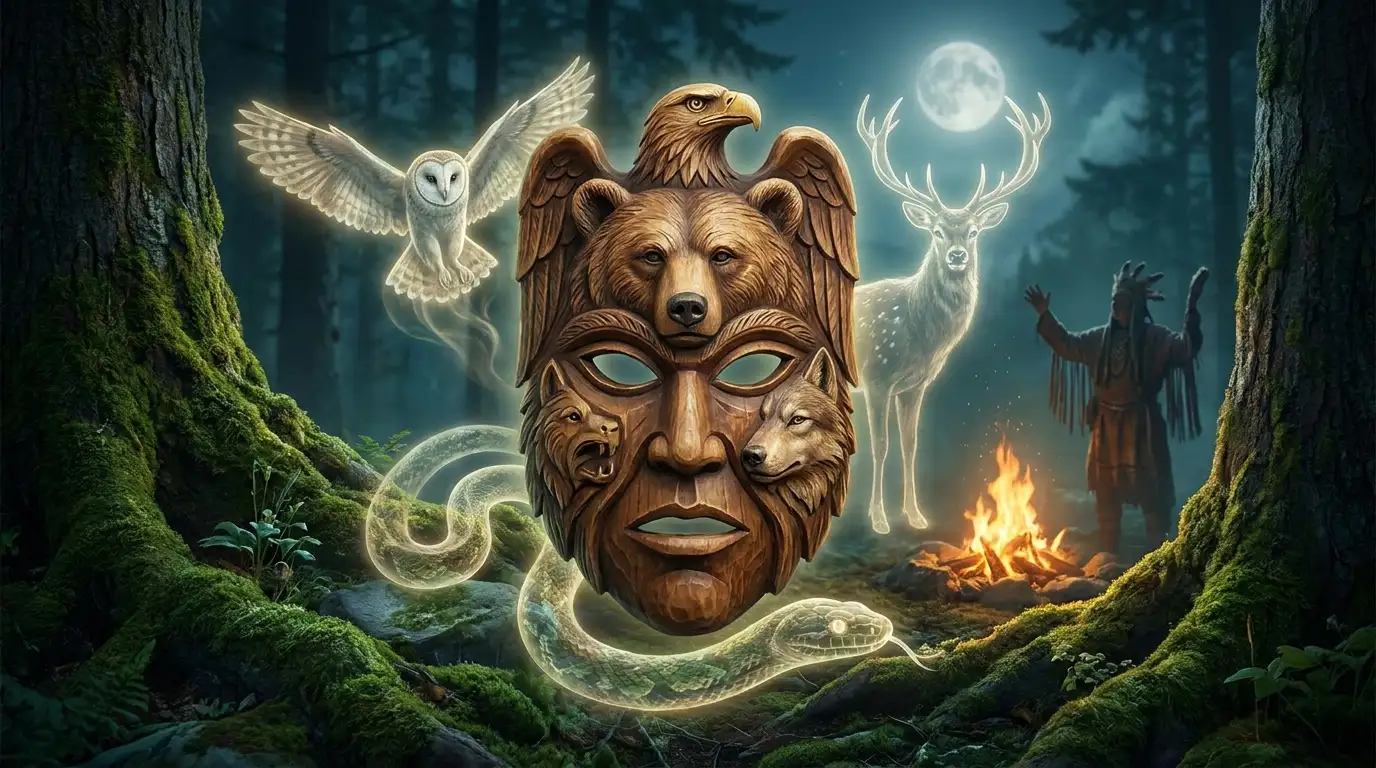
Animal archetypes in shamanism represent universal patterns of instinctual energy bridging indigenous animistic traditions and modern depth psychology. Shamanic practitioners utilize these symbolic entities to access the collective unconscious, seeking psychological healing, spiritual guidance, and personal empowerment. The synthesis of indigenous zoological totems with contemporary analytical psychology provides a framework for understanding how the human mind projects internal cognitive structures onto non-human species.
The Psychological Framework of Shamanic Animals
The integration of psychology and shamanism frames spirit animals as psychic realities rather than external supernatural entities. This theoretical crossover relies heavily on analytical psychology to explain how human consciousness accesses hidden cognitive structures through zoomorphic imagery. By translating tribal spirit retrieval into a clinical psychological context, practitioners systematically map the human psyche.
The Collective Unconscious and Jungian Archetypes
Jungian archetypes function as inherited potentials for human thought and behavior encoded within the collective unconscious. Shamanic journeys frequently trigger these archaic blueprints, projecting them into conscious awareness as specific animal forms. Carl Jung posited that these zoomorphic representations embody ancient instinctual drives shared between humans and non-human taxa. Practitioners interact with these archetypal structures to retrieve fragmented aspects of the psyche, translating raw biological imperatives into conscious understanding.
Psychological Integration and Shadow Work
Achieving psychological integration requires confronting repressed elements of the personality through shadow work. Shamanic rituals facilitate this process by presenting the shadow self in the guise of frightening, repulsive, or aggressive creatures. Engaging with these challenging animal figures allows the individual to safely assimilate negative or socially unacceptable traits. Successful integration transforms repressed psychic material into highly functional kinetic energy.
- Recognizing the repressed trait represented by the animal
- Accepting the instinctual drive without moral judgment
- Channeling the behavioral energy into conscious actions
- Maintaining an ongoing dialog with the psychic entity
Mythic and Symbolic Dimensions
Symbolic representation forms the operational language of the shamanic worldview, utilizing zoological imagery to convey complex metaphysical and ecological concepts. These dimensions encompass ancient mythological narratives and internal visualizations that guide the practitioner toward instinctual realignment. Decoding these symbols allows the conscious ego to mediate between the material environment and the immaterial psyche.
Animal Symbolism and Mythic Animals
Animal symbolism distills intricate ecological behaviors and spiritual traits into easily recognizable totemic emblems. Mythic animals, including the griffin, the thunderbird, or the winged serpent, combine anatomical features from multiple taxa to express transcendent concepts unconstrained by physical biology. Indigenous cultures globally encode their cosmological maps using these zoological signifiers. The synthesis of disparate biological traits in a single mythical beast typically points toward the unification of opposing psychological forces.
Dream Animals and Active Imagination
Dream animals emerge spontaneously during periods of REM sleep to communicate subconscious conflicts and latent biological potentials. The psychological technique of active imagination enables practitioners to intentionally re-enter these nocturnal landscapes while remaining fully awake. By conversing with these psychic entities, individuals bypass the defensive mechanisms of the ego to access raw instinctual wisdom. This waking dream state bridges the neurological divide between conscious logic and unconscious intuition.
| Process | State of Consciousness | Primary Function |
|---|---|---|
| Shamanic journeying | Trance state | Information retrieval |
| Dream incubation | Sleep state | Subconscious processing |
| Active imagination | Waking reverie | Ego mediation |
Ecological Dynamics in Shamanism
Shamanic paradigms mirror the harsh biological realities of natural ecosystems, translating ecological interactions into operational spiritual methodologies. The relational mechanics between different biological species provide an exact template for navigating power structures and energy exchange in the immaterial world. By observing trophic levels in nature, practitioners develop highly specialized metaphysical techniques.
Predator Dynamics
Predator dynamics in spiritual practice emphasize focused intention, territorial boundary maintenance, and decisive kinetic action. Carnivorous archetypes, represented by the wolf, tiger, or eagle, model the tracking, pursuit, and capturing of vital spiritual resources. Practitioners invoke these apex entities when they need to dismantle energetic blockages, extract toxic intrusions, or confront hostile psychological forces.
Prey Dynamics
Prey dynamics instruct individuals in the vital survival arts of evasion, situational awareness, and energetic conservation. Herbivorous figures such as the deer, rabbit, or antelope teach hypersensitivity to subtle environmental shifts and auric disturbances. This specific archetype proves vital for practitioners navigating volatile psychic environments where defensive maneuvering and rapid retreat take precedence over confrontation.
Behavioral Mimicry
Behavioral mimicry involves the somatic replication of an animal’s locomotion, posture, and acoustic vocalizations. Ritualistic dances and rhythmic chants allow the shaman to temporarily adopt the physiological and neurological state of the target creature. This somatic mirroring accelerates the induction of altered states of consciousness and permanently solidifies the neurological pathways linking the practitioner to the archetype.
Common Animal Archetypes
Specific archetypal categories recur across geographically disparate global cultures, indicating an underlying universal vocabulary of animal powers. These core figures fulfill distinct, non-overlapping functional roles within human psychological development and tribal survival strategies. Identifying these recurring patterns assists modern practitioners in diagnosing spiritual deficiencies.
The Trickster Archetype
The trickster archetype destabilizes rigid social structures and stagnant mental habits through deliberate deception, humor, and paradox. Zoological representations of this chaotic force frequently include the coyote, raven, fox, or spider. This figure introduces necessary entropy into overly ordered psychological systems, prompting rapid innovation and cognitive adaptation.
- Exposing human hypocrisy and hubris
- Reversing traditional social hierarchies
- Inventing new technologies or survival tactics
- Crossing forbidden boundaries between worlds
The Mother Archetype
The mother archetype governs nourishment, physical protection, and cyclical regeneration within the natural biological order. Bear and bovine imagery commonly embodies this fiercely protective yet nurturing matrix. Engaging with this maternal configuration provides deep psychological grounding and fosters emotional resilience during periods of severe spiritual depletion.
The Warrior Archetype
The warrior archetype mobilizes targeted aggression, physical courage, and self-sacrifice for the strict protection of the broader community. Solitary, territorial hunters like the jaguar, badger, or wolverine frequently serve as the zoomorphic vessel for this militant energy. This particular configuration enables the practitioner to establish impenetrable personal boundaries and actively combat spiritual or psychological fragmentation.