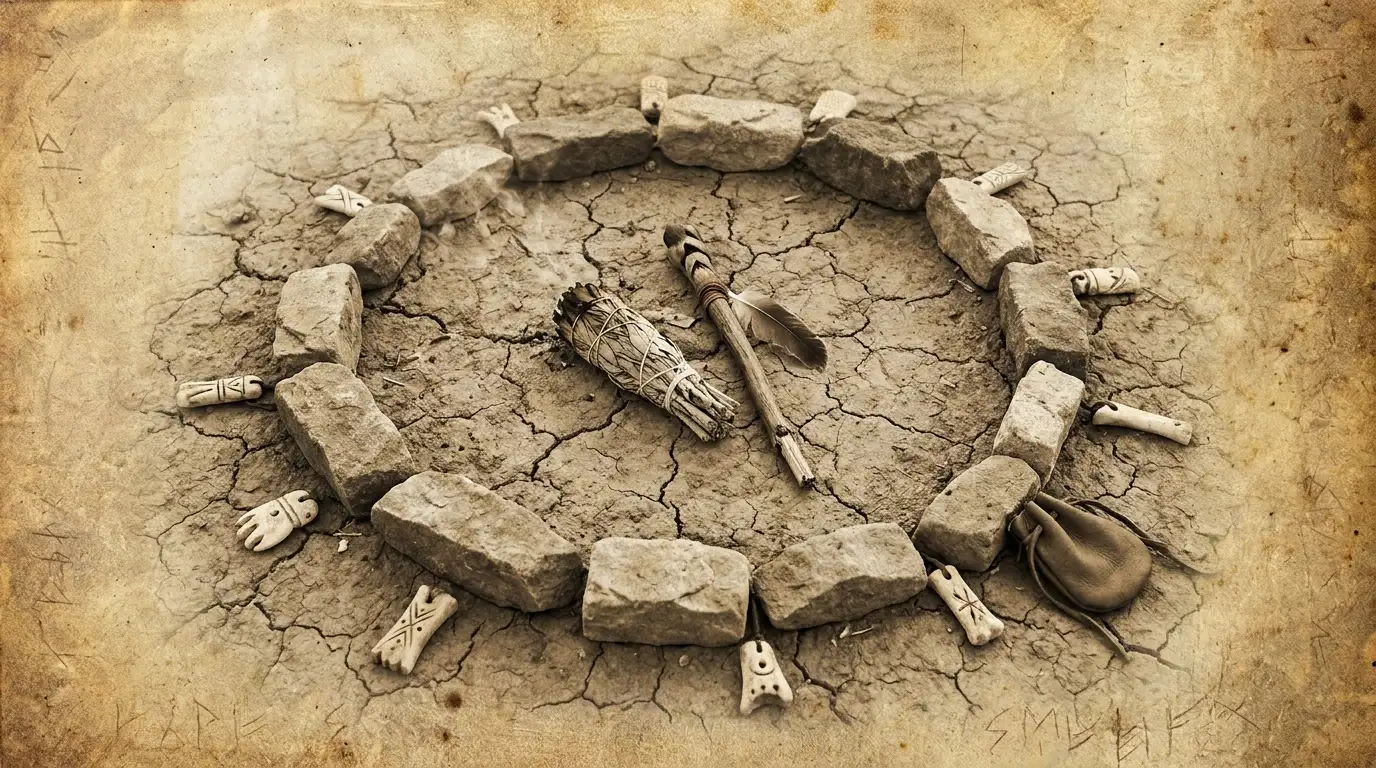
Creating and warding sacred space in shamanism involves intentionally shifting a physical location from an ordinary state into a protected, highly charged environment for spiritual work. Shamanic practitioners achieve this transformation through the deliberate application of spiritual hygiene, energetic boundaries, and directional invocations. The process isolates a specific area from mundane reality, allowing the practitioner to communicate with spirit guides, perform healing rituals, or undertake shamanic journeys safely. Effective space clearing and warding prevent interference from intrusive entities while containing the raised energy within the designated perimeter.
Fundamentals of Shamanic Sacred Space
The architecture of sacred space relies on establishing clear multidimensional coordinates that anchor the practitioner within the spiritual realms. Practitioners construct these environments by defining a center point and radiating boundaries outward to form a contained operational zone. This structural framework separates the working area from mundane influences and provides a stable foundation for altered states of consciousness. The effectiveness of the resulting container depends entirely on the precision of its geometric and energetic alignment.
Axis Mundi and the Medicine Wheel
The concept of the axis mundi serves as the central pillar of any shamanic workspace. This cosmic axis acts as the vertical conduit connecting the Upper World, Middle World, and Lower World. Practitioners position themselves at this exact locus to operate as the bridge between earthly and spiritual dimensions. The vertical alignment stabilizes the practitioner’s consciousness during astral travel and trance states.
Surrounding this central pillar, the medicine wheel maps the horizontal plane of existence. The wheel utilizes sacred geometry to divide the surrounding space into four distinct quadrants, each corresponding to specific natural forces. This circular configuration mimics the natural cycles of time, seasons, and human development. The integration of the vertical axis and the horizontal wheel creates a complete spherical container for spiritual operations.
Invoking the Four Directions and Elemental Quarters
Calling the four directions establishes the structural perimeter of the magical circle. Shamanic traditions universally recognize the cardinal points, though specific associations vary across indigenous cultures. The practitioner systematically acknowledges the East, South, West, and North to anchor the spatial boundaries.
Each direction aligns with specific elemental quarters that provide distinct energetic qualities to the ritual container. The elemental forces of air, fire, water, and earth are invited into the space to balance the internal environment. The presence of these elements ensures the working area remains dynamically stable.
| Direction | Element | Time of Day | Season | Life Stage |
|---|---|---|---|---|
| East | Air | Sunrise | Spring | Birth |
| South | Fire | Midday | Summer | Youth |
| West | Water | Sunset | Autumn | Adulthood |
| North | Earth | Midnight | Winter | Elderhood |
Preparation and Spiritual Hygiene
Proper preparation demands rigorous attention to both the physical and energetic cleanliness of the selected environment. Practitioners must eliminate residual energy signatures before attempting to raise power or contact helping spirits. Failing to clear the area leaves stagnant astral debris that can distort the ritual’s outcome or attract unwanted spiritual attention. Consistent maintenance of the working environment prevents the accumulation of hostile forces.
Cleansing and Smudging Protocols
The practice of cleansing removes preexisting energetic imprints from the environment. Practitioners physically clean the room by sweeping floors, removing clutter, and dusting surfaces to disrupt stagnant energy pockets. Following the physical cleaning, practitioners apply specialized techniques to neutralize the subtle environment.
The application of smudging introduces plant spirit medicine to purify the air and surrounding energy field. Burning dried white sage, palo santo, or cedar releases smoke that binds to dense energetic particles. The practitioner directs this smoke into corners, doorways, and alcoves using a feather or fan.
Methods for clearing the space:
- Burning specific resin incenses like copal or frankincense on charcoal disks
- Spraying floral waters such as Florida water around the perimeter
- Ringing tingsha bells or sounding singing bowls to break up dense energy
- Sweeping the floor with a dedicated broom made from birch twigs
- Sprinkling salt water across the threshold and window sills
Managing the Magical Vacuum
Aggressive space clearing inevitably generates a magical vacuum. Removing all energetic signatures from a room leaves an empty void that nature inherently seeks to fill. Hostile or opportunistic entities may rush into this localized void if the practitioner fails to occupy it immediately.
Filling the void requires the rapid introduction of high-frequency energy. Practitioners chant, drum, or project personal power into the room to saturate the newly emptied space. Establishing a dominant frequency prevents the return of the banished elements and prepares the ground for permanent boundary installation.
Constructing the Physical Anchor
The manifestation of spiritual boundaries requires a dense physical focal point to ground the ethereal constructs. Shamanic practitioners utilize specific material arrangements to translate their energetic intentions into the physical plane. This focal point acts as a control terminal for the surrounding energetic structures.
Altar Building
The process of altar building creates the primary interface between the practitioner and the spirit world. The altar serves as the physical representation of the axis mundi and houses the tools necessary for the working. Practitioners construct these stations on flat surfaces, arranging items with deliberate spatial precision.
Placing objects on the altar follows the geometric logic of the medicine wheel. Items representing the elements, spirit allies, and ancestors are positioned in their corresponding directional quadrants. This arrangement continuously generates the specific energetic frequencies required to maintain the surrounding sacred space.
Components of a shamanic altar:
- Central candle or fire source representing the cosmic axis
- Cups of fresh water placed in the western quadrant
- Feathers or incense burners positioned in the eastern quadrant
- Stones or crystals arranged in the northern quadrant
- Specific spirit vessels or effigies of tutelary allies
Establishing Energetic Boundaries
Securing the perimeter of the ritual space involves the deployment of localized force fields that filter incoming and outgoing energies. Practitioners construct these barriers to selectively permit helping spirits while blocking hostile forces. The strength of these perimeters determines the overall safety and efficacy of the shamanic operation.
Warding and Threshold Magic
The deployment of warding creates a semi-permanent defensive perimeter around the working area. Wards function as energetic alarms and shields, actively repelling entities that attempt to breach the space. Practitioners anchor these shields into the physical architecture of the room.
The practice of threshold magic focuses specifically on the transitional points of the room, such as doors and windows. These physical entryways double as spiritual access points and require concentrated defensive measures. Practitioners seal these openings by drawing symbols in the air, placing protective stones, or laying lines of salt across the floorboards.
Common threshold warding materials:
- Iron nails driven into the four corners of a doorframe
- Black tourmaline crystals placed on window sills
- Red brick dust sprinkled across the primary entryway
- Bundles of protective herbs hung above the door
- Sigils painted in uncrossing oil on the threshold
Managing Liminal Spaces
Understanding the nature of liminal spaces is required for effective boundary management. These are the betwixt-and-between areas, the localized points where ordinary reality and non-ordinary reality overlap. Ritual circles, doorways, and the moments of dawn and dusk all represent liminal conditions.
Operating within these spaces requires the practitioner to maintain dual awareness. The shaman must interact with the physical environment while simultaneously perceiving the astral constructs of the wards. Mastery over these transitional zones allows the practitioner to dictate what crosses the boundary.
Defensive Operations and Expulsions
Even the most robust wards occasionally fail to prevent the intrusion of dedicated hostile entities. Practitioners must possess the practical skills to remove these entities forcefully and restore the integrity of the perimeter. These operations shift the practitioner from a passive defensive posture to an active offensive stance.
Banishing Intrusive Energies
The act of banishing forcefully expels unwanted entities from the designated area. Unlike warding, which prevents entry, this protocol deals with threats that have already breached the perimeter. Practitioners command the entity to leave, often utilizing authoritative language, loud noises, and directed bursts of willpower.
Executing an expulsion requires absolute confidence and the backing of tutelary spirits. The practitioner identifies the location of the intrusion, isolates the entity, and forcefully pushes it beyond the established boundaries. Once the entity is removed, the practitioner must immediately reseal the breached ward to prevent reentry.
Steps for executing a localized banishing:
- Identifying the specific energetic signature of the intruder
- Generating a sudden burst of percussive sound using rattles
- Projecting a forceful command of expulsion toward the entity
- Sweeping the residual energetic trail out through a window
- Sealing the breach with a permanent warding mark
| Technique | Primary Function | Timing of Application | Nature of Action |
|---|---|---|---|
| Warding | Prevents initial access | Proactive | Passive defense |
| Cleansing | Removes ambient debris | Preparatory | Neutralization |
| Banishing | Expels active threats | Reactive | Active offense |