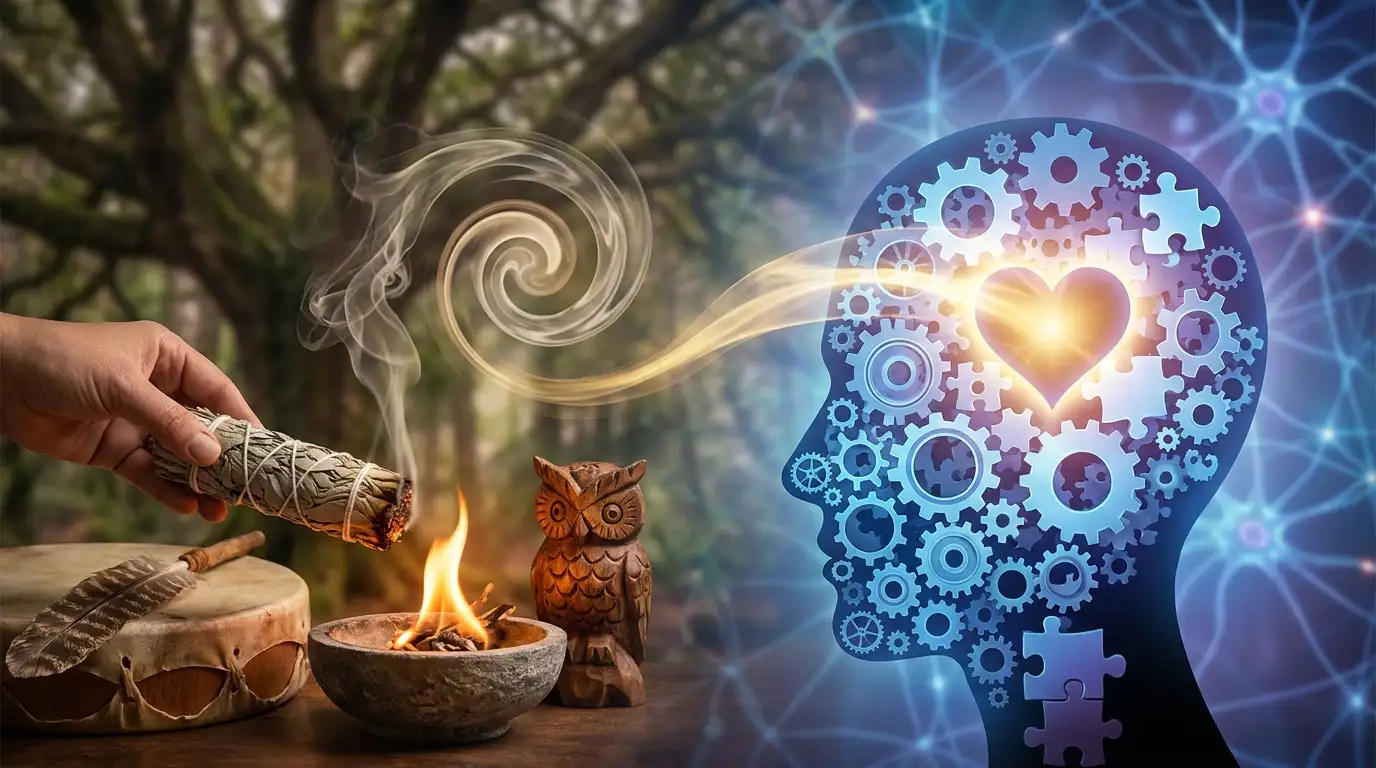
Therapeutic shamanism operates as an integrative framework that merges traditional indigenous healing techniques with contemporary clinical psychotherapy. This cross-cultural paradigm addresses psychological fragmentation by treating the mind, the central nervous system, and the subjective spirit as an interconnected neurobiological network. Clinical practitioners utilize altered states of consciousness to bypass cognitive resistance, access traumatic memory networks, and restore overall psychological coherence. The purposeful synthesis of these distinct therapeutic modalities provides a structured mechanism for individuals to process complex developmental wounds and resolve existential distress.
Theoretical Foundations
Theoretical foundations of therapeutic shamanism rely on multidisciplinary frameworks that validate non-ordinary states and the symbolic language of the human mind. These underlying paradigms bridge the epistemological gap between indigenous cosmologies and Western clinical psychology. Mental health professionals utilize these frameworks to explain how ritual interventions and visionary states directly affect neurobiology and internal psychological organization. The primary psychological models applied to shamanic practice include analytical psychology and specific interpretative models of esoteric belief systems.
Jungian Psychology and the Collective Unconscious
Jungian psychology provides a robust lexicon for translating shamanic visionary experiences into clinical therapeutic terms. The Swiss psychiatrist Carl Jung posited the existence of the collective unconscious, a shared psychic substrate populated by universal neuro-symbolic templates called archetypes. Shamanic journeying directly parallels the Jungian clinical technique of active imagination, where individuals consciously interact with autonomous unconscious material. Through this therapeutic lens, visionary encounters with spirit guides or power animals function as archetypal representations of internal psychological resources.
The application of Jungian psychology in clinical settings maps the process of psychological individuation onto the tripartite shamanic cosmos. Encounters along the axis mundi in the Lower, Middle, and Upper Worlds mirror the clinical requirement for the ego to assimilate repressed unconscious contents. This mapping allows psychotherapists to treat encounters with malevolent entities as safe clinical confrontations with the shadow, the disowned aspects of the patient’s personality.
The Psychological Model of Magic
The psychological model of magic interprets esoteric rituals and spirit interactions as sophisticated methods for reprogramming the human psyche. This framework posits that spirits, demons, and deities are neuro-linguistic personifications of repressed psychological complexes or latent neurocognitive states. Shamanic interventions operate within this model as symbolic psycho-dramas that successfully bypass the conscious defense mechanisms.
Applying the psychological model of magic removes the supernatural prerequisites from traditional shamanic healing. The clinical practitioner initiates psychological change by manipulating archaic symbols that possess deep emotional resonance within the patient’s limbic system. This secular interpretation allows scientifically minded individuals to engage in holistic healing practices without compromising their strict materialist worldview.
Modalities of Therapeutic Shamanism
Modalities of therapeutic shamanism encompass structured protocols designed to safely induce trance states and extract actionable clinical insight. These specific methods adapt ancient indigenous practices for contemporary mental health treatment, ensuring strict ethical boundaries and psychological safety. Mental health practitioners act as non-directive facilitators rather than ultimate authorities, empowering the client to navigate their own internal psychological landscape. The primary mechanism involves the induction of the shamanic state of consciousness through predictable rhythmic auditory driving.
Shamanic Counseling
Shamanic counseling functions as a structured, client-centered methodology originally developed by the anthropologist Michael Harner. The counselor instructs the clinical client on how to use sonic driving to enter a theta-wave brain state. Clients learn to independently journey into non-ordinary reality to retrieve repressed information, resolve internal psychological conflicts, and acquire personal agency.
Shamanic counseling relies on specific procedural steps to ensure therapeutic efficacy. The counseling process incorporates various clinical guidelines.
- Formulating a clear clinical intention before the auditory induction
- Recording the visionary experience immediately upon return
- Transcribing the raw narrative using a digital dictation device
- Reviewing the subjective material with the counselor to identify metaphors
- Applying the extracted psychological wisdom to current behavioral patterns
Trauma Healing and Somatic Interventions
Trauma healing within a shamanic context prioritizes the restoration of physiological safety and the recovery of dissociated psychic material. Shamanic frameworks intuitively align with modern somatic psychology by recognizing that severe trauma remains trapped in the physical tissues and the autonomic nervous system. Clinical interventions aim to discharge trapped survival energy and restore the homeostatic neurobiological balance of the patient. The combination of narrative restructuring and bodily engagement creates a comprehensive resolution to post-traumatic stress disorder.
Somatic Experiencing and Nervous System Regulation
Somatic experiencing offers a precise physiological map for understanding how shamanic rituals treat acute shock trauma. The biophysics framework developed by Peter Levine explains that trauma occurs when the biological fight-or-flight response is thwarted, leaving the nervous system trapped in a state of chronic hyperarousal or parasympathetic freeze. Shamanic drumming, vocal chanting, and spontaneous physical shaking act as targeted somatic interventions that stimulate the vagus nerve and promote immediate nervous system regulation.
Somatic experiencing principles validate the physical components of traditional shamanic rituals. Ritualistic actions modulate the nervous system through multiple physiological pathways.
- Rhythmic auditory stimulation lowers heart rate variability
- Deep breathing patterns downregulate the sympathetic nervous system
- Vocal toning releases muscular tension in the vocal cords and diaphragm
- Physical trembling discharges excess systemic cortisol and adrenaline
- Focused tactile grounding restores spatial proprioception and physical boundaries
Soul Retrieval and Inner Child Healing
Soul retrieval represents the shamanic equivalent of treating severe psychological dissociation resulting from chronic developmental trauma. Indigenous traditions posit the concept of susto, where severe trauma causes a fragment of the vital essence to flee the physical body to survive an overwhelming ordeal. Modern clinical terminology describes this exact phenomenon as structural dissociation, where the primary personality splits to encapsulate the traumatic memory network.
Inner child healing directly parallels the soul retrieval process by guiding the adult ego state to rescue, comfort, and integrate arrested developmental parts. The shamanic practitioner tracks these fragmented psychological components within the unconscious mind and facilitates their safe return. This integrated psychotherapeutic approach reduces the symptoms of complex post-traumatic stress disorder by restoring the structural integrity of the patient’s psyche.
Spiritual Crisis and Mental Health
Spiritual crisis and mental health overlap significantly when individuals experience sudden expansions of awareness without adequate sociocultural context. Mental health professionals increasingly recognize that sudden transpersonal experiences can closely mimic severe psychiatric pathology. Differential diagnosis remains critical in clinical settings to distinguish between organic neurochemical imbalances requiring medical intervention and developmental transitions requiring psychotherapeutic support. Integrating shamanic perspectives prevents the unnecessary pathologization of valid, growth-oriented transpersonal experiences.
Spiritual Emergence vs. Spiritual Emergency
Spiritual emergence refers to the natural, gradual unfolding of transpersonal psychological potential within an individual. This steady maturation process involves expanded states of perception, increased somatic sensitivity, and a deepened cognitive connection to ecological systems. The clinical psychologist Stanislav Grof established this psychological framework to categorize non-pathological shifts in human consciousness.
Spiritual emergency occurs when the influx of transpersonal material overwhelms the cognitive integration capacities of the individual. Acute episodes of existential crisis, mystical states, and subjective ego death often present with symptoms mirroring acute psychosis. Misdiagnosing a spiritual emergency as schizophrenia can lead to the harmful pharmacological suppression of a natural psychological healing mechanism. Therapeutic shamanism provides a grounded clinical container for these crises, offering ontological mapping and somatic grounding techniques to stabilize the fragmented psyche.
The Integration Process
The integration process constitutes the critical final phase where profound non-ordinary insights are grounded into permanent behavioral modifications. Shamanic visionary experiences often produce profound cognitive shifts that dissipate rapidly if not deliberately anchored in physical reality. Psychotherapists utilize cognitive behavioral tools, art therapy, and targeted somatic grounding to weave the retrieved unconscious material into the client’s daily routine. Successful psychological integration transforms transient states of holistic healing into enduring, stable personality traits.
The integration process relies on the translation of symbolic imagery into practical psychological frameworks. The alignment of these paradigms enables the patient to cognitively process the visionary material.
| Shamanic Terminology | Clinical Psychological Concept | Primary Therapeutic Application |
|---|---|---|
| Power animal retrieval | Ego strengthening | Increasing self-efficacy and boundary setting |
| Extraction healing | Somatic release | Discharging trapped physiological trauma energy |
| Soul retrieval | Trauma integration | Resolving structural dissociation and amnesia |
| Underworld journeying | Shadow work | Making repressed unconscious material conscious |
| Ancestral healing | Genogram analysis | Identifying and breaking intergenerational trauma |