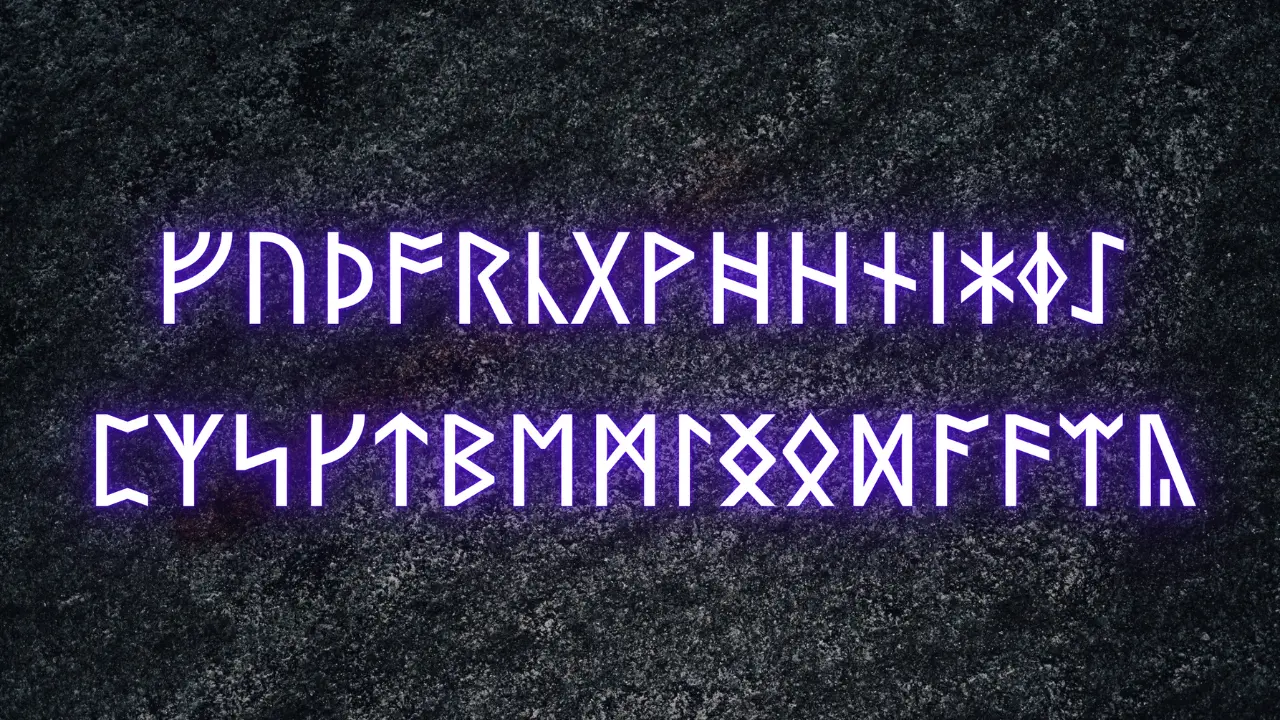
The Anglo-Saxon Futhorc represents the most elaborate evolution of the runic tradition, expanding the primordial 24 characters of the Elder Futhark into a nuanced system of up to 33 staves. Developing in the British Isles from the 5th to the 11th centuries, this script mirrors the linguistic complexity of Old English and the cultural synthesis of Germanic paganism with Roman Christianity. Unlike the reductive tendencies of the Viking Age Younger Futhark, the Futhorc demonstrates a trajectory of growth, adapting to capture the subtle vowel shifts of the Anglo-Frisian dialects while flourishing within the scriptoria of Northumbrian monasteries.
The Expansion of the Character Row
The migration of Germanic tribes (Angles, Saxons, and Jutes) to Britain necessitated an immediate modification of the runic row. The Proto-Germanic language possessed a vowel system that was rapidly diversifying in the mouths of the settlers. The original 24 runes were insufficient to distinguish between the new phonemes.
This phonetic pressure resulted in the splitting of the original Ansuz rune. To represent the distinct vowel sounds, the Anglo-Saxons created three separate characters:
- Aesc (Ash Tree): Representing the /æ/ sound (as in “cat”). This rune retained the shape of the original Ansuz but took the name of the ash tree.
- Ac (Oak Tree): Representing the /ɑ/ sound (as in “father”). This was a new invention, reflecting the sacred status of the oak in the insular landscape.
- Os (Mouth/God): Representing the nasalized /o/ sound. This rune modified the shape of Ansuz and retained the divine association with the Aesir (gods), specifically Woden.
This process of differentiation expanded the standard row to 28 runes, creating a system that was phonetically precise and deeply rooted in the local flora and theology of Britain.
The Old English Rune Poem as Primary Source
Our knowledge of the Futhorc’s meanings derives primarily from the Old English Rune Poem. Preserved in the manuscript Cotton Otho B.x (tragically damaged in a fire in 1731, but transcribed beforehand), this text provides a stanza for each rune, linking the symbol to a specific concept, object, or natural phenomenon.
Unlike the terse, often cryptic stanzas of the Norwegian or Icelandic poems, the Old English verses are descriptive and contemplative. For instance, the stanza for Sigel (Sun) describes it as a joy to seafarers, while the stanza for Eoh (Yew) details the tree’s physical properties as a “guardian of flame” and a “joy on the estate.” These poems served a dual purpose: they were mnemonic devices for memorizing the alphabet and meditational verses that encoded the cultural values of the Anglo-Saxon world.
Christianization and Syncretic Usage
A defining characteristic of the Futhorc is its survival and usage within a Christian context. Rather than being suppressed as tools of heathenry, runes were adopted by the Church for monumental and decorative purposes. This syncretism is most visible on the Ruthwell Cross, an 8th-century stone monument in Scotland.
The cross features scenes from the Gospels carved in relief, bordered by runic inscriptions. These runes spell out verses from The Dream of the Rood, a poem in which the Cross itself speaks of its agony in bearing Christ. This usage confirms that runes were viewed as a high-status script capable of conveying sacred Christian theology.
Similarly, the Franks Casket (or Auzon Casket) demonstrates a complex intellectual culture. Carved from whalebone, it depicts pagan Germanic legends (Wayland the Smith) alongside biblical history (The Adoration of the Magi), all surrounded by runic text. This artifact illustrates that the Anglo-Saxon elite saw no contradiction in blending their ancestral lore with their new faith.
The Northumbrian Extension (Runes 29–33)
In the kingdom of Northumbria, a center of learning and monasticism, the Futhorc underwent its final expansion. Scholars added runes to represent distinct sounds found in local dialects and loanwords, bringing the total to 33.
These “extra” runes include:
- Calc: Representing the /k/ sound (chalk/chalice).
- Stan: Representing the /st/ sound (stone).
- Gar: Representing the hard /g/ sound (spear).
- Cweorth: A mysterious rune representing /kw/, often associated with the “fire-twirl” or ritual hearth.
The rune Gar is frequently placed at the end of the row, symbolizing the “Spear of Odin” (Gungnir) or the center point of the runic wheel, effectively sealing the alphabet.
Material Culture and Epigraphy
The Futhorc was not confined to stone. The Thames Scramasax (or Seax of Beagnoth), a 9th-century fighting knife found in the River Thames, features the complete 28-rune row inlaid in copper, brass, and silver wire along the blade. The inscription of the alphabet on a weapon suggests a belief in the inherent power of the letters themselves to imbue the object with efficacy or protection.
Manuscripts such as the Codex Sangallensis 878 further preserve the tradition, showing that monks studied runes as a form of “cryptography” or antiquarian curiosity long after the Latin alphabet had become the standard for daily communication. This manuscript preservation ensured that the names and shapes of the Futhorc survived the Norman Conquest, eventually allowing for their rediscovery by modern philologists and magicians.