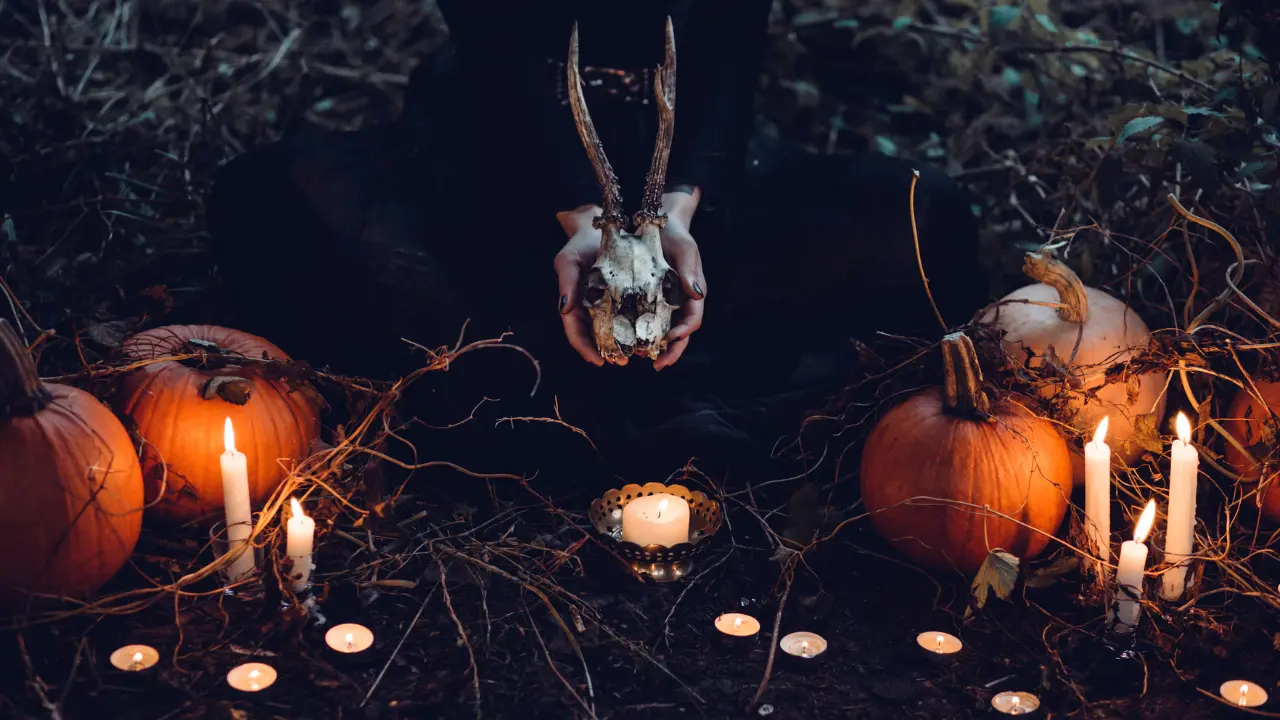
Deity work, spirit conjuration, and pantheon syncretism in modern witchcraft are the operative frameworks through which a witch forms alliances with divine intelligences and non-human entities to amplify spellcraft. Contemporary occultists engage gods and spirits not through passive religious submission, but through transactional reciprocity, theurgic invocation, and sympathetic alignment. Whether petitioning a single patron deity or synthesizing Greco-Egyptian ritual formulas, effective spirit work demands precise historical literacy and energetic boundaries.
How Modern Witches Approach Deities
Modern witches approach deities through three primary ontological lenses: literal independent beings, impersonal energetic currents, or psychological archetypes. A witch’s chosen ontology dictates whether a ritual is structured as an external diplomatic negotiation or an internal psychodrama.
Theistic and animistic sorcerers treat gods as autonomous, pre-existing intelligences possessing distinct wills, preferences, and territorial domains. Under this literal framework, offerings of frankincense, wine, or blood feed the spirit liturgy and establish mutual obligation. Conversely, energy-focused mages view a deity as a concentrated reservoir of cosmic force (treating Mars as a raw current of combustion and severing), while psychologically oriented witches invoke divine forms as Jungian complexes entrenched in the collective unconscious. In my own ritual practice, treating an entity as a literal guest inside the circle consistently generates stronger physiological gnosis and sharper tangible manifestations than reducing the god to a mental metaphor.
Hekatean Sorcery and Lilith in Contemporary Craft
Hekate and Lilith stand as the two most prominent chthonic powers in modern eclectic witchcraft, governing liminal thresholds, necromancy, and personal autonomy. Both entities demand direct confrontation with fear and shadow rather than gentle devotional aesthetics.
Hekate at the Crossroads
Hekatean witchcraft draws heavily from archaic Anatolian devotion, the Chaldean Oracles, and the syncretic spells of the Papyri Graecae Magicae (the Greco-Egyptian magickal papyri). Operating as the cosmic Kleidouchos (the bearer of the iron bolts that unbar the gates between Tartarus, Earth, and Olympus), Hekate grants the sorcerer passage across spiritual borders and command over restless ghosts (aoroi).
Operative devotion to Hekate centers on the dark moon Deipnon, a monthly rite where the witch leaves a supper of garlic, leeks, eggs, and honey cake at a three-way crossroads without looking back. When I petition her under epithets such as Brimo (the wrathful) or Enodia (she of the ways), I anoint iron talismans with myrrh and garlic-infused oil to anchor apotropaic wards around my working space.
Lilith for Shadow Work and Sovereignty
Lilith enters modern witchcraft through Sumerian and Akkadian demonology (the lilitu wind spirits) alongside medieval Kabbalistic texts like the Alphabet of Ben Sira. Witches invoke Lilith to catalyze ruthless shadow work, reclaim bodily sovereignty, and sever submissive behavioral conditioning. Rituals dedicated to her utilize black candles dressed with dragon’s blood resin, pomegranate seeds, and obsidian mirrors for scrying into repressed trauma or casting retributive bindings against predatory individuals.
Pantheon Syncretism: Hellenic and Ancient Egyptian Magick
Pantheon syncretism is the strategic fusion of deities and ritual mechanics from distinct cultural traditions into a functional magickal system. Successful syncretism relies on matching shared cosmological functions and planetary correspondences rather than blindly mixing incompatible liturgical rules.
Greek Gods and Hellenic Syncretism
Working with the Greek pantheon requires building kharis (reciprocal grace established through consistent libations and hymns) while respecting the division between ouranioi (heavenly) and chthonioi (underworld) rites. In traditional Hellenic protocol, a mage petitions ouranioi gods like Apollo or Athena with palms turned upward and shares the food offering, whereas chthonioi powers like Hades or Persephone receive complete holocaust offerings poured directly into the earth. Modern eclectic witches frequently adapt the Orphic Hymns as sonic invocations, pairing specific planetary incense with each deity to draw their authority into talismanic consecrations.
Ancient Egyptian Heka for Modern Witches
Ancient Egyptian magick operates on the principle of heka, the primordial creative force that animates the cosmos and links physical matter to divine archetypes. Unlike passive prayer, heka combines sia (divine perception) with hu (authoritative vocal command), allowing the sorcerer to speak in the first person as a deity such as Isis, Thoth, or Sekhmet to compel lower spirits into obedience. Contemporary witches apply Egyptian mechanics through wax or clay figurines, red ink execration texts smashed over pottery to destroy hostile influences, and solar alignments modeled after the Pert Em Hru (the Book of the Dead).
Familiars in Modern Witchcraft: Astral Spirits vs Household Pets
Familiars in authentic witchcraft are specialized spirit allies (famuli) contracted to assist a sorcerer in divination, astral reconnaissance, and malefic or protective spellwork. Confusing a biological household pet with an occult familiar is a modern misconception that exposes domestic animals to severe energetic exhaustion. In early modern cunning craft, a witch acquired a familiar spirit either as a gift from an initiating deity or by conjuring a local land elemental into an artificial housing (such as a hollowed root, bone, crystal vessel, or wax poppet fed with herbal smoke and vital fluids). While a house cat may naturally perceive astral shifts in a room, an operative witch constructs a dedicated astral servitor or spirit vessel to absorb psychic backlash and patrol the perimeter of the home.
Setting Up a Devotional vs Operative Deity Altar
Structuring a deity altar requires distinguishing between a permanent devotional shrine for ongoing veneration and a temporary operative workspace built for a specific spell. Conflating these two setups clutters a working table with conflicting residual energies and disrupts liturgical focus.
- Devotional Shrine: Positioned on a clean, dedicated shelf or high surface, this permanent space houses a central cult image (statue or consecrated art), an offering bowl for daily water or wine libations, a censer for preferred resins, and a dedicated flame to maintain ongoing rapport with a patron deity.
- Operative Working Altar: Assembled only for the duration of a specific ritual, this functional surface holds only the tools, sympathetic materials, sigils, and deity symbols required to execute the immediate objective, alongside a single offering tied directly to the petition.
Once an operative spell concludes, the witch thanks the invoked intelligence, disposes of the physical offering at an appropriate outdoor threshold, and clears the working surface completely. Maintaining this strict separation preserves the sanctity of your devotional relationships while keeping your spellcasting workspace sharp and adaptable.