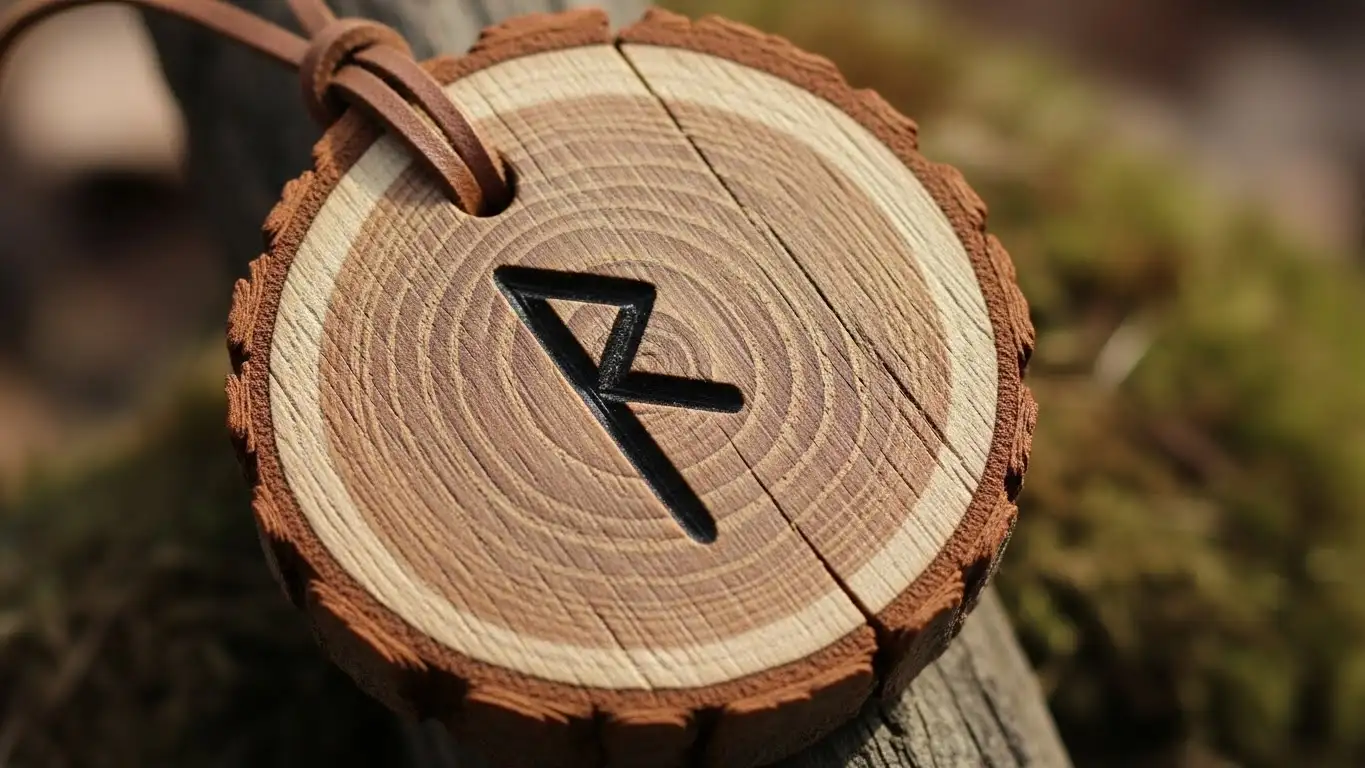
Taufr, the Old Norse term for a magical object or talisman, operates within a functional framework that predates and differs significantly from the modern binary of amulets and talismans found in Western ceremonial magic. In traditional Runic Magick, objects are not classified by whether they strictly repel negative energy (amulets) or attract positive outcomes (talismans), but rather by the specific domain of life they influence, such as victory in battle, safety at sea, or eloquence in speech. The creation of a Taufr is a tripartite process involving carving, coloring, and chanting, designed to imbue a physical object with Megin (power) and Hamingja (luck). While modern eclectic practices, particularly Chaos Magick, view sigils as psychological triggers to be destroyed after use, the historical Vitki (sorcerer) viewed the Taufr as a durable, living battery of power animated by the essence of the magician.
Taufr Etymology and Red Ochre Significance
The etymological roots of the word Taufr reveal a fundamental connection between the concept of sorcery and the physical materials used to facilitate it. The term derives from the Proto-Germanic taubrą, which denotes magic, sorcery, or a talisman. This linguistic lineage is cognate with the Old English word teafor, which refers specifically to red ochre or vermilion, a pigment historically used to mark wood or stone.
This semantic relationship suggests that in the Germanic worldview, the act of magic was inseparable from the act of reddening. A runic inscription was not considered active or “alive” until it was stained. The use of red pigment—whether derived from mineral ochre or biological fluids—served as the bridge between the inert material of the object and the active will of the practitioner. Consequently, a Taufr is not merely a symbol; it is a material object that has been chemically and ritually altered to hold a magical charge.
Modern Magick vs. Norse Tradition
Contemporary occultism, heavily influenced by the Golden Dawn and Hermetic traditions, typically categorizes magical objects into two distinct types: amulets, which are defensive and apotropaic (turning away evil), and talismans, which are projective and attractive (drawing in specific forces). Traditional Runic Magick does not recognize this rigid dichotomy. Instead, the Norse worldview utilizes a functional classification system where a single object may serve both protective and projective purposes simultaneously depending on its intent.
For example, a Taufr carved for a warrior is not strictly a talisman for luck nor strictly an amulet for shielding; it is a tool of agency designed to alter the web of fate (Wyrd) in the user’s favor. The efficacy of these objects relies on the transfer of Megin—a concept of power and potential—and Hamingja, a transferable force of luck and guardian spirit. In this animistic framework, the object becomes a vessel for these forces, operating continuously within its assigned domain rather than simply pushing or pulling energy in a linear direction.
Classifications of Taufr in Sigrdrífumál
The primary historical source for categorizing runic magic is the Sigrdrífumál (The Lay of Sigrdrifa), a poem within the Poetic Edda. In this text, the Valkyrie Sigrdrifa instructs the hero Sigurd in the application of runes, dividing them into eight distinct functional families. These categories illustrate the domain-specific nature of traditional Taufr.
Sigrúnar and the Martial Application
Sigrúnar (Victory Runes) represent the martial application of Runic Magick, designed to secure triumph in combat. The text instructs the Vitki to carve these runes onto the hilt and blade of a sword and to invoke the name of Tyr twice. This is an inherently offensive and projective magic, yet it serves the protective function of preserving the warrior’s life.
Bjargrúnar, Brimrúnar, and Environmental Protection
These categories address survival against natural and biological threats.
- Bjargrúnar (Birth/Help Runes): These are employed to assist women in labor, loosen the fetus from the womb, and protect the newborn. They function as a safeguard during a critical biological transition.
- Brimrúnar (Sea/Wave Runes): Essential for a seafaring culture, these are carved on the prow and rudder of a ship. They ensure the vessel traverses the sea safely, acting as a shield against the chaotic forces of the ocean (represented by the giantess Rán).
- Ölrúnar (Ale Runes): These are carved on a drinking horn or the back of the hand to protect against poison and betrayal. If a drink is poisoned, the Taufr is said to break or the danger becomes manifest.
Málrúnar, Hugrúnar, and Cognitive Enhancement
These runes govern social and intellectual domains.
- Málrúnar (Speech Runes): Used to grant eloquence and prevent opponents from prevailing in verbal disputes at the Thing (legislative assembly).
- Hugrúnar (Mind Runes): Designed to sharpen the intellect and grant wisdom superior to that of others.
| Rune Class | Old Norse Term | Primary Function | Traditional Placement |
|---|---|---|---|
| Victory Runes | Sigrúnar | Combat success | Sword hilt, scabbard |
| Ale Runes | Ölrúnar | Protection from poison | Drinking horn, back of hand |
| Sea Runes | Brimrúnar | Safety at sea | Ship prow, rudder |
| Birth Runes | Bjargrúnar | Safe childbirth | Palms, joints |
| Branch Runes | Limrúnar | Healing | Bark, east-facing branches |
| Speech Runes | Málrúnar | Eloquence, legal victory | Tongue (metaphorical), amulet |
| Mind Runes | Hugrúnar | Wisdom, intelligence | Chest, heart |
| Giant Runes | Thursrúnar | Cursing, causing madness | Scorn poles (Níðstang) |
The Tripartite Ritual of Construction
The creation of a traditional Taufr follows a strict ritual protocol often summarized by the three verbs: Rista (to carve), Fá (to color), and Gala (to chant).
Rista: The Incision of the Stave
The process begins with Rista, the physical act of carving the runes into a base material, known as a Hlutr. This base is typically wood (such as yew, ash, or oak), bone, or metal. The act of incision is the initial separation of intent from the chaotic potential of the universe. The Vitki uses a knife (Sax) to cut the staves, ensuring the grain of the wood does not distort the shape, as incorrect carvings can lead to disastrous results.
Fá: The Reddening with Blót or Pigment
Once carved, the runes are technically lifeless scratches until they undergo Fá. This step involves reddening the runes, traditionally with blood obtained through a minor sacrifice (Blót) or the Vitki‘s own blood. In modern contexts where blood is not used, red ochre or other natural red pigments serve as the substitute. This “staining” mimics the circulation of life force, animating the Taufr and linking it to the magician’s own vitality.
Gala: The Vocalization of Galdr
The final activation is Gala, the singing of Galdr (magic songs). The Vitki chants the names of the runes or specific incantations over the object. This sonic vibration is believed to breathe the magician’s will into the physical form, finalizing the binding of the spell to the material.
The Path of a Modern Vitki
Modern eclectic practitioners often blend Runic Magick with the techniques of Chaos Magick, though the underlying theories differ fundamentally. In Chaos Magick, a sigil is typically created, charged with intent, and then destroyed (burned or buried) to bypass the conscious mind and implant the desire into the subconscious (“fire and forget”).
In contrast, a traditional Taufr is treated as a permanent or semi-permanent battery. It is not destroyed to release its power; rather, it is preserved to radiate its influence continuously. A modern eclectic witch might create a Bindrune (a graphical combination of runes) using Chaos Magick design principles but will likely “feed” the object with oil, incense, or attention rather than destroying it. While the Chaos approach views the magic as psychological and subjective, the traditional Runic approach views the Taufr as an objective spirit-vessel that requires maintenance.
Historical Attestations in Egil’s Saga
The Icelandic sagas, particularly Egil’s Saga, provide concrete historical examples of Taufr usage that validate the theoretical distinctions between correct and incorrect craftsmanship.
- The Whalebone Taufr: Egil encounters a sick girl whose condition was worsened by a whalebone charm placed in her bed. The charm had been carved by a neighbor who lacked the skill to do so correctly (“No man should carve runes unless he can read them well”). The incorrect runes acted as a poison. Egil scraped off the runes and burned the shavings to neutralize the negative magic, then carved new healing runes to cure her.
- The Níðstang (Scorn Pole): Egil creates a powerful cursing object using a hazel pole and a horse’s head. This Níðstang was a directional Taufr intended to drive the land spirits (Landvættir) away and curse King Eric Bloodaxe.
- The Poisoned Horn: Suspecting his drink was poisoned, Egil carved runes onto a drinking horn and reddened them with his blood. The horn shattered, confirming the presence of poison and saving his life—a direct application of Ölrúnar.