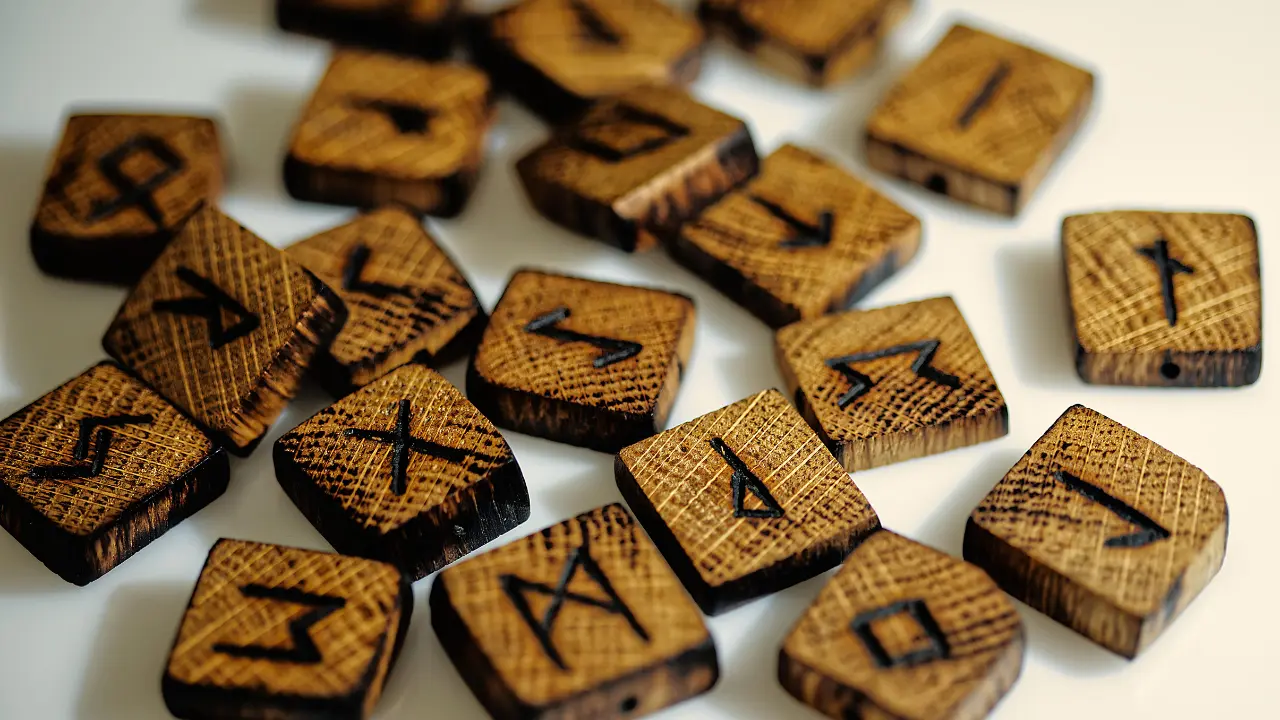
Runic Magick is an esoteric system rooted in the animistic worldview of the Germanic peoples, functioning not through petitioning external deities but through the direct manipulation of the causal fabric known as Wyrd. Unlike the elaborate hierarchies of Ceremonial Magick or the belief-based fluidity of Chaos Magick, this paradigm operates as a linguistic and somatic technology. The central premise holds that specific sonic vibrations, geometrical postures, and inscribed glyphs (Runes) possess an objective, intrinsic capacity to alter the “sediment” of reality.
For the modern magickal adept, the distinction between the signifier and the signified is critical. The word Runa (Proto-Germanic rūnō) predates the physical script, translating to “whisper,” “secret,” or “mystery.” The physical stave carved into wood is merely the hardware; the resonant frequency channeled by the magus is the software. Historical roles such as the Erilaz (Rune Master), Vitki (Sorcerer), and Völva (Seeress) demonstrate a highly specialized division of labor, yet the contemporary eclectic witch often synthesizes these approaches to navigate the complex energetic currents of the modern era.
The Metaphysics of the North: Cosmology and Fate
The operational framework of Runic Magick relies on a non-linear perception of time and a multi-dimensional cosmology centered on Yggdrasil.
Wyrd and Orlog
Temporal reality in the Northern Tradition is defined by the Well of Urd, a reservoir containing the accumulated layers of past actions known as Orlog (Primal Law). Every thought and deed deposits sediment into this well, creating a density that shapes the present. Wyrd is the active process of weaving these threads. A spell cast by a mage is an attempt to introduce a new thread into this pre-existing fabric. If the Orlog—the momentum of past events—is too dense, a low-energy working will fail to alter the pattern.
Yggdrasil and the Nine Worlds
The runes function as keys to the specific frequencies of the Nine Worlds suspended in the branches of the World Tree.
A Fehu working draws directly from the primordial fire of Muspelheim; an Isa working taps into the absolute stasis of Niflheim; an Uruz working accesses the raw, formative vitality of the Ginnungagap. The magus serves as the Axis Mundi, a living conduit grounding these extra-dimensional energies into Midgard (physical reality).
The Norse Soul Complex (Psychology of Magick)
Effective Runic Magick requires the engagement of the entire Soul Complex, a polycentric model of the self far more nuanced than the simple body-soul duality.
- Önd: The vital breath or pneumatic force. This is the carrier wave for all Galdr; without the conscious infusion of Önd, a rune remains an inert shape.
- Hamingja: Often reductive translated as “luck,” Hamingja is a transferable reservoir of spiritual power and ancestral prestige. It acts as the “voltage” of the adept; high Hamingja allows for significant alterations of Wyrd, while low Hamingja limits magickal efficacy.
- Fylgja: The “Fetch” or spirit ally, typically manifesting as an animal totem. In Seidr, the Fylgja serves as the vehicle for the Völva’s consciousness during spirit travel.
- Megin: Personal power, vitality, and strength.
Operational Mechanics: The Ritual Protocol
The execution of a runic working generally follows a strict “Load-Cast-Lock” protocol, ensuring energy is generated, directed, and severed with precision.
Phase 0: Hallowing (The Hammer Rite)
The magus must first define the operational reality by creating a sanctuary or Vé. This is typically achieved through the Hammer Rite, tracing the sign of the Hammer (invoking Thurisaz or Tiwaz energy) in the cardinal directions to banish chaotic wights and establish a controlled environment.
Phase 1: Load (Intent & Blót)
The “Load” phase involves the internal accumulation of Önd and Megin, focusing intent into a singular crystalline concept. Crucially, this phase necessitates a Blót (offering). The physics of the Northern Tradition are transactional: “A gift looks for a gift.” The adept offers mead, incense, blood, or physical labor to the runes or tutelary spirits to generate the necessary kinetic potential.
Phase 2: Cast (Activation)
The accumulated energy is released into the target matrix through three primary channels:
- Risting: The physical carving of the runes into wood, bone, or metal. The friction of the Seax against the grain creates a “Need-Fire,” sparking manifestation.
- Galdr: The sonic vibration of rune names. This is not singing but intoning the phonemes in the throat to create a resonance matching the carved form.
- Stadhagaldr: Runic Yoga. The magus assumes the somatic posture of the rune—standing with arms raised for Algiz or rigid for Isa—aligning the body’s geometry with the runic frequency to act as a living antenna.
Phase 3: Lock (Release)
The connection must be severed. If the mage retains an attachment to the outcome, the energy is re-absorbed. The Taufr (talisman) is covered, buried, or hidden, and the mind is forcefully grounded, often through eating or physical sensation, to “snap” the link.
Modalities: Galdr vs. Seidr
The tradition bifurcates into two distinct technological approaches, which the modern eclectic witch often integrates into a cohesive practice.
| Feature | Galdr | Seidr |
|---|---|---|
| Primary Method | Chanting, carving, geometry, structure. | Trance, drumming, spirit riding, fluidity. |
| Energy Type | Projective, Solar, Masculine (Yang). | Receptive, Lunar, Feminine (Yin). |
| Key Tools | Seax (Knife), Rune Staves. | Gand (Staff), Distaff, High Seat. |
| Archetype | Odin (Runemaster), Tyr, Thor. | Freyja, Odin (Shaman), The Völva. |
| Goal | Altering objective reality, binding, warding. | Divination (Spæ), soul retrieval, mind influence. |
The Concept of Ergi
Historically, Seidr was stigmatized as Ergi (effeminate/shameful) for men because it involved surrendering agency to be “ridden” by spirits. Odin himself was mocked for practicing it. In contemporary practice, this taboo is recognized as an archaic social construct; male and female adepts alike utilize Seidr for deep psychospiritual work, while Galdr remains the architectural method for material manifestation.
Tools of the Trade
- The Seax: The ritual knife represents the discriminatory will of the magus. It must be iron or steel, sharp enough to cut hard woods like Ash or Yew without slipping, symbolizing the precise severance of Wyrd.
- The Gand: Distinct from the directing wand of ceremonial magick, the Gand is the staff used in Seidr to “ride” the hedge between worlds or to rhythmically beat the earth to induce trance states.
- Taufr and Teina: A Taufr is the completed talismanic object. Teina are the individual rune sticks. To activate them, they must be “reddened” (teina), historically with blood but often with ochre or red pigment in modern eclectic practice, symbolizing the infusion of life-force.
A Note on Magickal Safety & Efficacy
Runic efficacy is absolute and indifferent, operating with the cold logic of syntax rather than moral arbitration; a sloppily coded Hagalaz working for “transformation” typically manifests via the path of least resistance, potentially delivering a catastrophic vehicle collision rather than a gentle career pivot. Advanced adepts understand that the primary vector of failure is not demonic interference but the “Monkey’s Paw” literalism of the runes combined with insufficient Blót—if the kinetic cost is not prepaid, the working often cannibalizes the caster’s own Megin to balance the entropic equation. Furthermore, coercive binding rituals create a sympathetic tether; locking down an adversary’s Wyrd establishes a bi-directional conduit, risking a necrotic blowback where their subsequent psychological collapse siphons the magus’s own Hamingja through the very knot tied to suppress them.