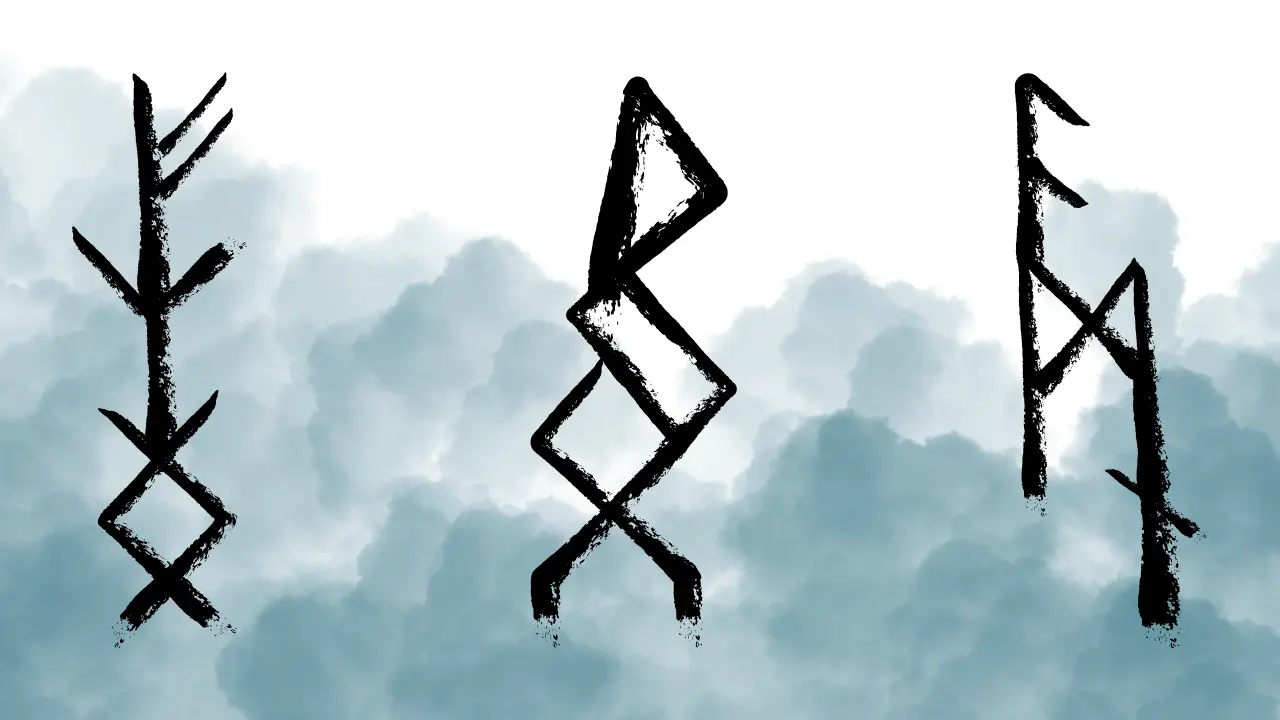
A Bindrune (Bandrún) functions as a capacitor for magickal intent, compressing a linear sequence of forces into a singular, simultaneous energetic event. Unlike a runic script, which functions linguistically like a sentence to narrate a flow of time (e.g., “wealth arrives then grows”), a bindrune operates as a logogram or a musical chord, striking all notes of the spell at once. For the modern adept, the construction of these sigils is the art of programming Wyrd through geometry, creating a distinct entity that runs a specific command loop in the background of reality.
Runic Sigil Types
Precision in terminology prevents the muddling of distinct magical technologies. A common error in the eclectic community involves conflating the architectural stacking of the Elder Futhark with the labyrinthine staves of later periods.
| Feature | Bindrunes (Bandrún) | Magick Staves (Galdrastafir) |
|---|---|---|
| Origin | Germanic Iron Age/Viking Age. | Medieval/Early Modern Iceland (15th-17th C.). |
| Components | Distinct, legible runes (e.g., Fehu + Raidho). | Abstracted Christian/Pagan hybrids, Solomonic seals. |
| Structure | Vertical stacking on shared stems. | Radial (spokes), labyrinthine, or grid-based. |
| Function | Custom intent defined by the specific combination. | Fixed purpose (e.g., Vegvisir for wayfinding). |
Bandrún
The Bandrún is the primary tool of this article. It relies on the legibility of the component runes, even if they are stylized. The magic lies in the specific interaction between the selected forces—for example, binding Algiz (Protection) to Raidho (Journey) to create a specific “Safe Travel” ward.
Galdrastafir
Galdrastafir represent a different lineage, often dealing with more specific, folk-magick concerns like catching thieves or preventing butter from souring. Symbols like the Helm of Awe (Aegishjalmur) utilizes a radial architecture to project force outward, distinct from the internal synthesis of a bindrune.
Ligature and Stave Construction
The fundamental mechanic of binding is the Ligature—the fusion of multiple characters through a shared vertical line or Stav. This connects the “nervous systems” of the individual runes, forcing them to operate as a single circuit.
The Central Axis
Most bindrunes are built around a central vertical spine. This often invokes the stability of Isa (Ice) or the world-axis of Eihwaz (Yew).
- Draw the primary vertical line.
- Attach the branches of the component runes to this line.
- Ensure the connection points are clean; a broken line breaks the circuit.
Asymmetry and Weight
Symmetry is aesthetically pleasing but energetically neutral; asymmetry directs the flow. In eclectic practice, the visual “weight” of a component dictates its priority. If the goal is “Wealth protected by aggressive force,” the Fehu (Wealth) component might be drawn larger or with thicker lines, while the Thurisaz (Force) is smaller, acting as a subservient guard dog. The sigil does not need to be balanced like a corporate logo; it must feel “heavy” in the direction of the intent.
Personal Symbolism
The efficacy of a sigil relies heavily on the magus’s psychological connection to it. Strict adherence to historical shapes can sometimes feel sterile. Infusing the bindrune with personal stylistic flourishes—curving the lines to mimic water for a Laguz working, or sharpening angles for a Tiwaz working—embeds the caster’s own psychic signature into the glyph, bridging the gap between an ancient alphabet and modern desire.
Runic Sigils in Contemporary Witchcraft
The modern eclectic witch utilizes bindrunes as focal points for multi-modal workings, blending Northern tech with other occult systems.
Amulets and Talismans
The most traditional application is the physical object. Carving the bindrune into wood or engraving it on metal anchors the energy in the physical plane. These are “set and forget” batteries that radiate the programmed intent over a long duration.
Seidr, Trance Work, and Visualization
Bindrunes serve as excellent gateways for Seidr trance work. The complex shape acts as a mandala, holding the conscious mind’s attention while the intent sinks into the deep mind. Instead of physical carving, the magus can visualize the sigil glowing in the mind’s eye (or the astral void) during deep meditation. This imprint can be used to “brand” a target or to open a portal during mental journeying, oneiromancy, or astral projection.
Sonic Activation (Sigil Galdr)
Every bindrune possesses a sonic signature. By fusing the phonemes of the component runes, the adept constructs a unique mantra or name for the entity they have created. A bindrune combining Fehu and Othala might be intoned as “Feee-Oooo” or merged into a new power-word like “Foth.” Vibrating this name (Galdr) while visualizing the glyph creates a synesthetic resonance, locking the visual form and the auditory frequency together. This technique is particularly potent for charging the air in a room or activating the sigil without physical tools.
Chaos Magick Parallels
There is a functional overlap with Chaos Magick. A ritually created, highly-detailed bindrune (especially one that evolves over time) can be treated as a Hypersigil—an extended, evolving work of art that alters reality.
A practitioner might also deconstruct the runes into abstract strokes, removing the linguistic baggage to fire the sigil purely through Gnosis (exhaustion, orgasm, or trance).
Unintended Crossings
When multiple runes share a stem, their lines inevitably cross and merge, creating new shapes that were not part of the original design. These “artifacts” might potentially alter the frequency of the spell.
For instance, merging Kenaz (Torch) and Raidho (Ride) often creates an unintended Gebo (Gift/Exchange) where the diagonals intersect.
- The Risk: If you create an accidental Nauthiz (Constraint) in a freedom spell, you might sabotage the working (depending on how your unconscious interprets the symbol).
- The Mitigation: The witch should audit the final design. If a parasitic rune appears, shift the connection points up or down the stem to break the unintended shape. However, advanced practitioners often ignore these artifacts, viewing them simply as “unintended noise” that does not disrupt the original magickal intent.