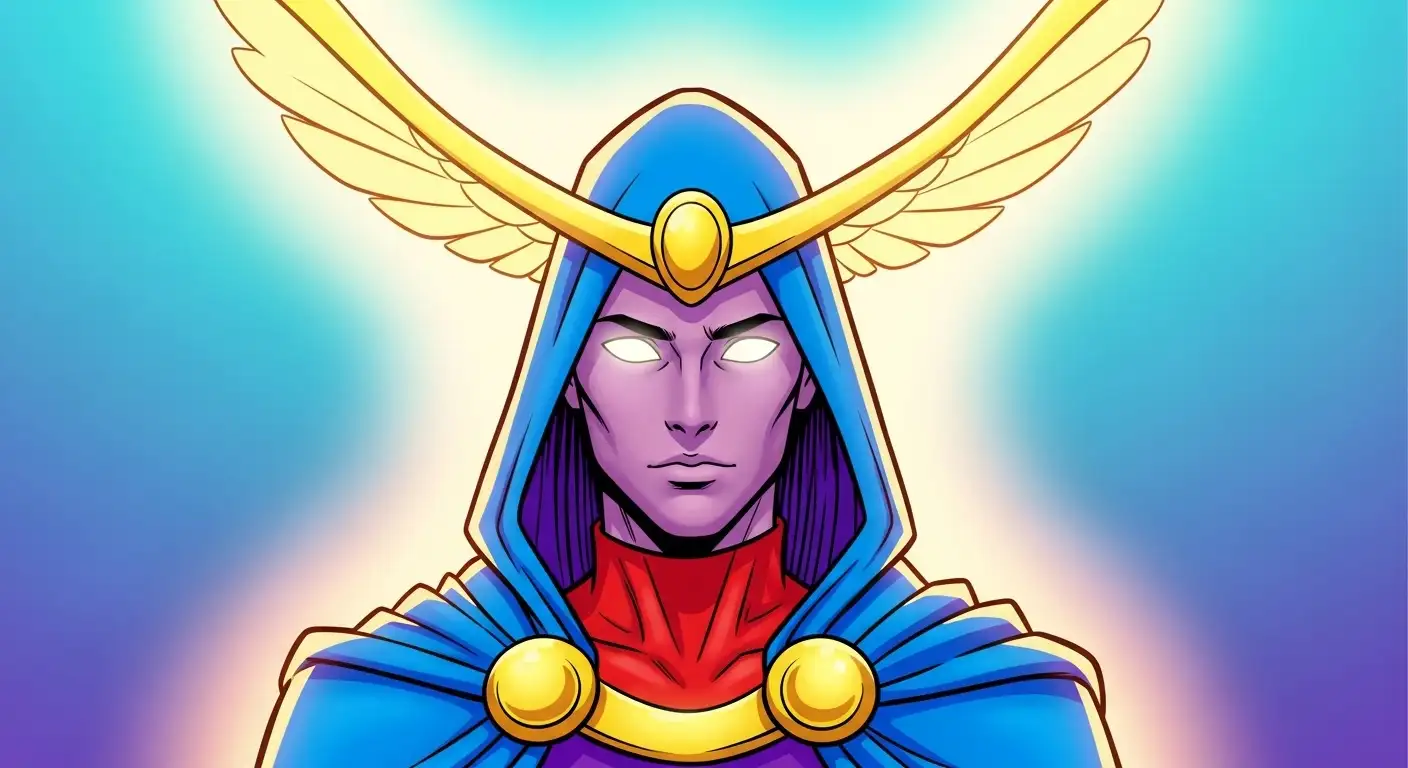
Pop Culture Magick (PCM) is a postmodern branch of Chaos Magick that utilizes contemporary mass media, fictional narratives, and corporate intellectual property as operative occult technologies. The system substitutes traditional religious deities and historical godforms with fictional egregores, commercial fetishes, and narrative hypersigils. Adepts harness the localized energy of fandoms and the altered states of media consumption to execute magickal operations, neutralizing historical dogmas in favor of immediate psychological resonance.
- PCM treats belief as a pragmatic technology rather than a spiritual endpoint.
- The system was formally codified by author Taylor Ellwood in 2004.
- Fictional characters function as mass-mind egregores powered by the collective attention of their audiences.
- Hypersigils represent four-dimensional narrative spells that entangle the creator’s reality with the fiction, famously utilized by Grant Morrison.
- Operative techniques involve media gnosis, NLP, and the use of commercial merchandise as spirit vessels.
What Is Pop Culture Magick?
Pop Culture Magick functions as a highly adaptable sorcery framework operating within the Chaos Magick paradigm. It relies on the information model of reality, which dictates that data, symbols, and narratives manipulate the underlying structure of consciousness and probability. Magi reject the necessity of ancient lineage or the objective existence of spirits. Instead, you extract the archetypal data encoded within a comic book, a television show, or a video game and deploy that data to cause change in conformity with will. The system emphasizes utility, asserting that an adept can channel the hyper-specific attributes of Batman for nocturnal protection as effectively as they might invoke a traditional archangel.
Origins and Evolution of the Paradigm
The operational framework of PCM emerged from the late 20th-century postmodern occult movements, though its roots trace back to early weird fiction. H.P. Lovecraft accidentally pioneered the concept when his Cthulhu Mythos was adopted by later magicians (such as Kenneth Grant or later Peter J. Carroll in his The EPOCH book) as a valid map of the magickal world, proving that explicit fiction could facilitate genuine occult contact. In 2004, occultist Taylor Ellwood formally systematized these practices in his foundational book, Pop Culture Magick, shifting the discipline from experimental fringe to a structured methodology. Parallel to Ellwood’s systematization, comic book writer Grant Morrison popularized the integration of narrative and occultism, demonstrating how mass media could be weaponized to shift global consciousness and alter personal reality.
How Do Fictional Egregores Work?
Fictional egregores operate as autonomous thoughtforms generated and sustained by the aggregate attention, emotion, and obsession of a specific fanbase. In traditional occultism, a deity feeds on the ritual worship of its cult. In the digital age, a tulpa or egregore feeds on the millions of hours of human consciousness directed at screens, fanfiction forums, and cosplay conventions. When a fanbase directs intense emotional volatility toward a character, they charge a distinct energetic construct in the astral commons. The Chaos Mage functions as a reality hacker, tapping into this pre-charged reservoir of fandom energy. You do not need to generate the power yourself; you simply align your intent with the specific frequency of the established egregore, treating the character’s canonical traits as the parameters of a magickal software program. An entity like Slenderman serves as a prime example of an open-source, crowdsourced egregore birthed entirely from collective internet focus.
Is Pop Culture Magick Real? The Validity of Fiction
The efficacy of PCM depends entirely on the psychological reality of the practitioner and the measurable output of the operation, rendering the historical validity of the entity irrelevant. The human brain cannot easily distinguish between a vivid, emotionally resonant narrative and an objective physical event. By engaging deeply with entertainment, you effectively bypass the psychic censor—the psychological mechanism that filters out magickal thinking. You achieve archetype assumption through narrative immersion. However, practitioners must navigate the volatility of these constructs; the “canon” (the official, corporate-owned lore) provides structural stability, while the “fanon” (the collective fan interpretation) provides chaotic, highly charged emotional energy. The reality of the magick manifests through the psychological shifts and synchronistic feedback loops triggered by the operation.
Operative Techniques and Modern Fetishes
Operative Pop Culture Magick divides into the internal absorption of fictional archetypes through targeted media consumption and the external manifestation of localized servitors using commercial merchandise as physical anchors.
Invocation of Fictional Archetypes
Invocation requires the practitioner to internalize the behavioral matrices and psychological parameters of a specific character to overwrite their own limiting beliefs. You achieve gnosis (the requisite altered state of consciousness for spellcasting) through active, intentional media consumption—watching a specific anime arc or playing a video game sequence until you achieve a state of hyper-focus. During this state, you utilize Neuro-Linguistic Programming techniques to anchor the character’s traits (e.g., the stoicism of a Jedi, the strategic brilliance of a tactician) to your own nervous system. The fictional character becomes a wearable psychological suit.
Evocation and Servitor Integration
Evocation externalizes the pop culture construct, drawing the energy out of the media and binding it into a defined workspace using tangible commercial goods. Instead of carving sigils into wax or binding spirits to traditional talismans, the modern mage utilizes high-fidelity action figures, replica props, and trading cards as fetishes and spirit vessels. These detailed physical anchors provide superior visual data for the imagination, effectively housing the servitor or egregore fragment. Furthermore, practitioners utilize sonic sigils by playing specific Original Soundtracks (OST) during ritual work, using the neurological association of the music to trigger immediate atmospheric shifts and summon the entity’s presence.
| Traditional Occult Implement | Pop Culture Magick Equivalent | Magickal Function |
|---|---|---|
| Clay Golem / Wax Poppet | High-Fidelity Action Figure / Funko Pop | Physical vessel for an evoked servitor or egregore |
| Grimoire / Scroll | Comic Book / Graphic Novel | The defined mythology and operational ruleset of the entity |
| Chanted Mantra | Iconic Catchphrase / Limit Break Name | Neurolinguistic trigger to release focused magical intent |
| Incense / Resins | Original Soundtrack (OST) / Sonic Sigil | Atmospheric shift and neurological anchoring for the ritual space |
| Scrying Mirror | Television Screen / VR Headset | Focal point for technological gnosis and narrative absorption |
The Application of Hypersigils
Hypersigils are four-dimensional narrative constructs designed to alter the macrocosmic reality of the creator and the consumer over an extended duration. Unlike a traditional two-dimensional visual sigil that is charged and quickly forgotten, a hypersigil unfolds dynamically through time, usually in the form of a comic book series, a novel, a concept album, or an ongoing blog. Grant Morrison’s seminal comic The Invisibles remains the most documented example; Morrison embedded their own life into the protagonist, discovering that the traumatic and victorious events written on the page subsequently manifested in their physical reality. To cast a hypersigil, you construct a piece of continuous art that acts as a voodoo doll of your own universe. You inject your personal mythology into the mass-media current, editing your reality by manipulating the narrative trajectory of your artistic output.