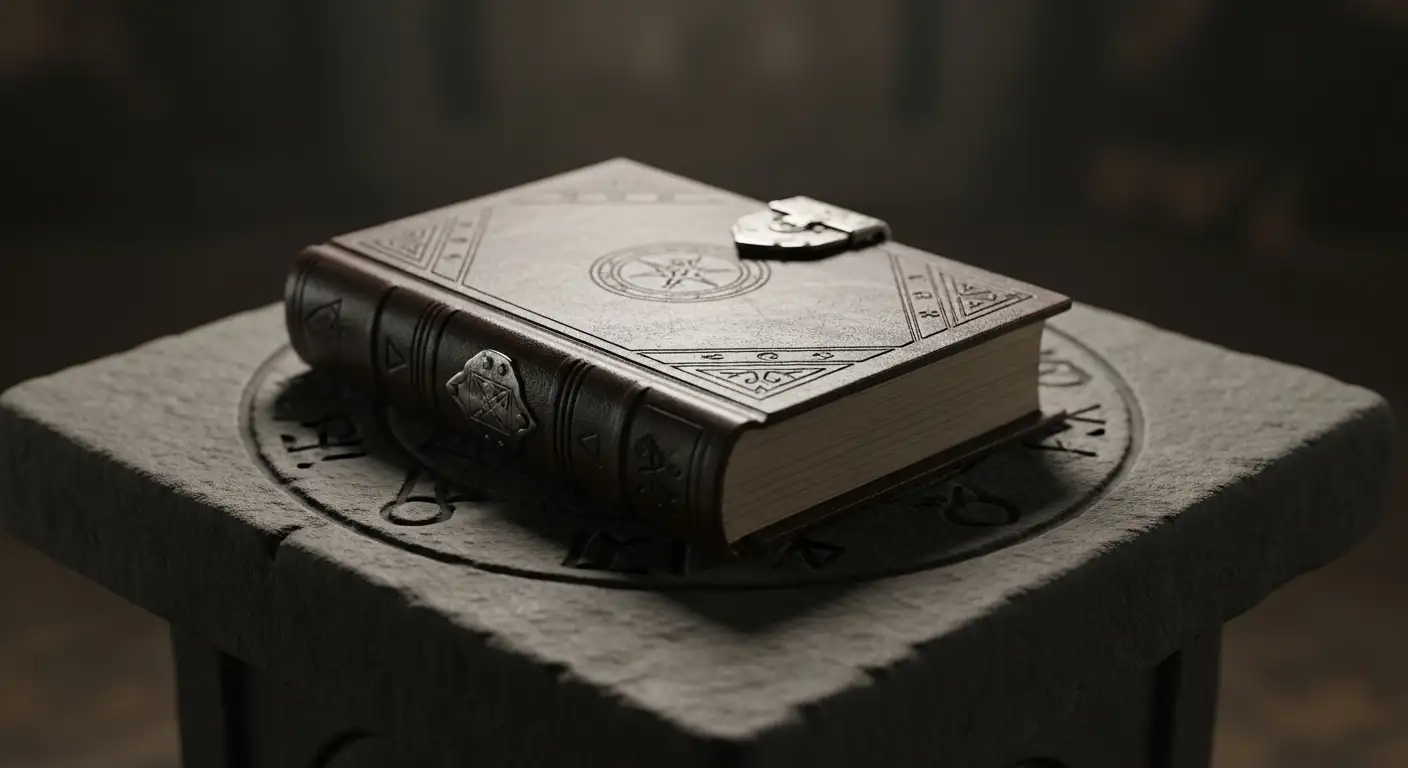
The foundational literature of Chaos Magick provides a structural framework for operational sorcery, rejecting traditional occult dogma in favor of psychological pragmatism and reality manipulation. The paradigm relies strictly on specific texts to transmit its methodologies, bypassing ancient lineage for results-oriented techniques. Three primary grimoires dictate the evolution of this system: Austin Osman Spare’s The Book of Pleasure, Peter J. Carroll’s Liber Null & Psychonaut, and Phil Hine’s Condensed Chaos.
- The Book of Pleasure introduced modern sigil mechanics and the Zos Kia Cultus in 1913.
- Liber Null & Psychonaut codified the Illuminates of Thanateros curriculum and the formal theory of magickal trance states in 1987.
- Condensed Chaos, although initially released in 1992, democratized the system in 1995, detailing practical servitor creation and discordian methodology.
- Practitioners utilize these texts sequentially to construct a personalized, operational sorcery framework.
While these foundational texts provide the essential historical and theoretical bedrock of the tradition, at the end of this article, I will also share my own alternative manual, The Chaos Magick Book: A Guide to Modern Chaos Magick, for those seeking a modern, physiologically-driven approach to the craft.
The Evolution of the Chaos Magick Paradigm
The historical progression of the Chaos paradigm illustrates a deliberate transition from rigid ceremonial dogma to a highly adaptable, results-oriented sorcery framework. Early 20th-century occultism demanded strict adherence to established pantheons and complex rituals. The development of Chaos Magick dismantled these requirements. The chronological progression begins with Austin Osman Spare and his initial rebellion against the Hermetic Order of the Golden Dawn, stripping magick down to its psychological components. Decades later, Peter J. Carroll systematized some of Spare’s raw concepts and added his own to form a teachable science. Phil Hine subsequently expanded on Carroll’s work, emphasizing accessibility and practical application over complex esoteric theory.
The Book of Pleasure: The Zos Kia Framework
The Book of Pleasure (Self-Love) establishes the intuitive, psychological engine of modern sorcery. The text details the dichotomy of the physical body and the universal mind, the mechanics of sigilization, and techniques for bypassing the internal critic.
The Grandfather of Modern Sorcery
Austin Osman Spare is often perceived as the “grandfather” of the paradigm. He dismantled the ceremonial complexities of traditional occult orders, isolating intent and subconscious absorption as the sole requirements for successful enchantment.
The Dichotomy of Zos and Kia
The system operates on a functional dualism. Zos represents the human body and its sensory apparatus. Kia represents the Atmospheric I, a state of universal, undifferentiated consciousness. Magick occurs when the Zos temporarily merges with the Kia.
Sigilization and the Alphabet of Desire
Spare invented the modern, reductionist method of sigil creation. You condense a written statement of intent into an abstract monogram, stripping away linguistic meaning to prevent conscious recognition. The alphabet of desire functions as a personal lexicon of foundational atavisms and subconscious drives.
Bypassing the Psychic Censor
The psychic censor acts as the conscious mind’s firewall, preventing magickal intent from reaching the subconscious. Spare developed the death posture—a technique involving extreme physical exhaustion, hyperventilation, and forced staring—to overload the sensory apparatus. This vacuity forces a temporary collapse of the psychic censor, allowing the sigil to implant directly into the subconscious mind.
Liber Null & Psychonaut: The Systematization of Chaos
Liber Null & Psychonaut provides the structural and pedagogical framework of the discipline. The combined volume outlines the Illuminates of Thanateros curriculum, formalizes the theory of magickal trance, and scales paradigm shifting to macrocosmic applications.
Peter J. Carroll and the IOT Syllabus
Peter J. Carroll published Liber Null in 1978 to serve as the official training manual for the Illuminates of Thanateros (IOT). The text shifts the focus from Spare’s intuitive mysticism to a replicable, quasi-scientific methodology.
Excitatory and Inhibitory Gnosis
Carroll categorized altered states of consciousness into two distinct avenues for achieving gnosis. Excitatory gnosis utilizes sensory overload, including hyperventilation, flagellation, and sexual climax. Inhibitory gnosis relies on sensory deprivation, fasting, and deep meditation. Both pathways achieve the necessary single-pointed focus required for magickal operations.
Liber MMM
This section details the foundational curriculum for the neophyte. You must master strict disciplines of mind control, physical immobility, and dream recall before progressing to operative spellcasting. It establishes a mandatory baseline of psychological control.
Psychonaut and Paradigm Shifting
Psychonaut addresses the macrocosmic application of sorcery. It introduces the concept of paradigm shifting, instructing the practitioner to arbitrarily adopt diverse belief systems (e.g., Shamanism, Cybernetics, Thelema) to achieve specific results. The practitioner discards the adopted belief system once the operation concludes.
Condensed Chaos: Pragmatic Paradigm Shifting
Condensed Chaos serves as the functional primer, stripping away the dense terminology of earlier texts. It emphasizes practical accessibility, operational deployment of thoughtforms, and the strategic use of humor.
Phil Hine’s Demystification of High Occultism
Phil Hine published Condensed Chaos in 1995 to counteract the elitist, complex structures developing within the IOT. He utilizes plain language to explain advanced occult concepts, ensuring the methodology remains accessible to the autonomous practitioner.
The Operational Deployment of Servitors
The text provides precise instructions for creating and launching servitors—autonomous, programmed thoughtforms designed to execute specific tasks. Hine details the complete lifecycle of a servitor, from the initial statement of intent to the necessary termination protocols.
Integrating Discordianism
Hine introduces principles derived from Discordianism to counteract the rigidity of traditional ritual. You utilize humor, absurdity, and laughter to banish lingering magickal intent. This banishing mechanism prevents the psychological trap of lust of result and accelerates the necessary forgetting process post-enchantment.
Synthesizing the Literature: A Reading Trajectory
Reading these books chronologically by the publication date may overwhelm a novice. Begin with Condensed Chaos to establish a functional, accessible baseline of operative techniques. Once you master basic sigilization and servitor creation, study Liber Null & Psychonaut to acquire structural discipline and macrocosmic theory. Then conclude the initial study phase with The Book of Pleasure. Spare’s dense, archaic prose becomes decipherable only after you understand the core mechanics of gnosis and the psychic censor.
| Foundational Text | Author | Methodology | Trance State | Paradigm Focus |
| The Book of Pleasure | Austin Osman Spare | Atavistic Resurgence | The Death Posture | Microcosmic / Intuitive |
| Liber Null & Psychonaut | Peter J. Carroll | Paradigm Shifting | Excitatory / Inhibitory Gnosis | Structural / Quasi-Scientific |
| Condensed Chaos | Phil Hine | Servitor Creation | Vacuity / Absurdity | Pragmatic / Discordian |
By synthesizing these three texts, you extract the raw intuitive power from Spare, the structural science from Carroll, and the pragmatic adaptability from Hine. This triadic foundation equips you to manipulate reality models without succumbing to dogmatic attachment.
Alternative Grimoire: The Chaos Magick Book by Daniel Domaradzki
While Spare, Carroll, and Hine provide the indispensable blueprints of chaos magick theory, modern practitioners sometimes struggle to ground these abstract concepts in their daily physical reality. In my own manual, The Chaos Magick Book: A Guide to Modern Chaos Magick, I offer an alternative, highly specialized approach that I call ‘neuromancy.’
Rather than replacing the classical grimoires, this book acts as a pragmatic, somatic companion. It strips away the remaining mystical veneer to view magick through a neuroscientific lens, bridging the gap between the physical body and the magickal mind. If you want to understand how to hack your autonomic nervous system, utilize physical conditioning as a vehicle for gnosis, and apply the mechanics of sigils and servitors as direct executable code for your brain, this manual provides a brutal, results-oriented framework for the modern operator.